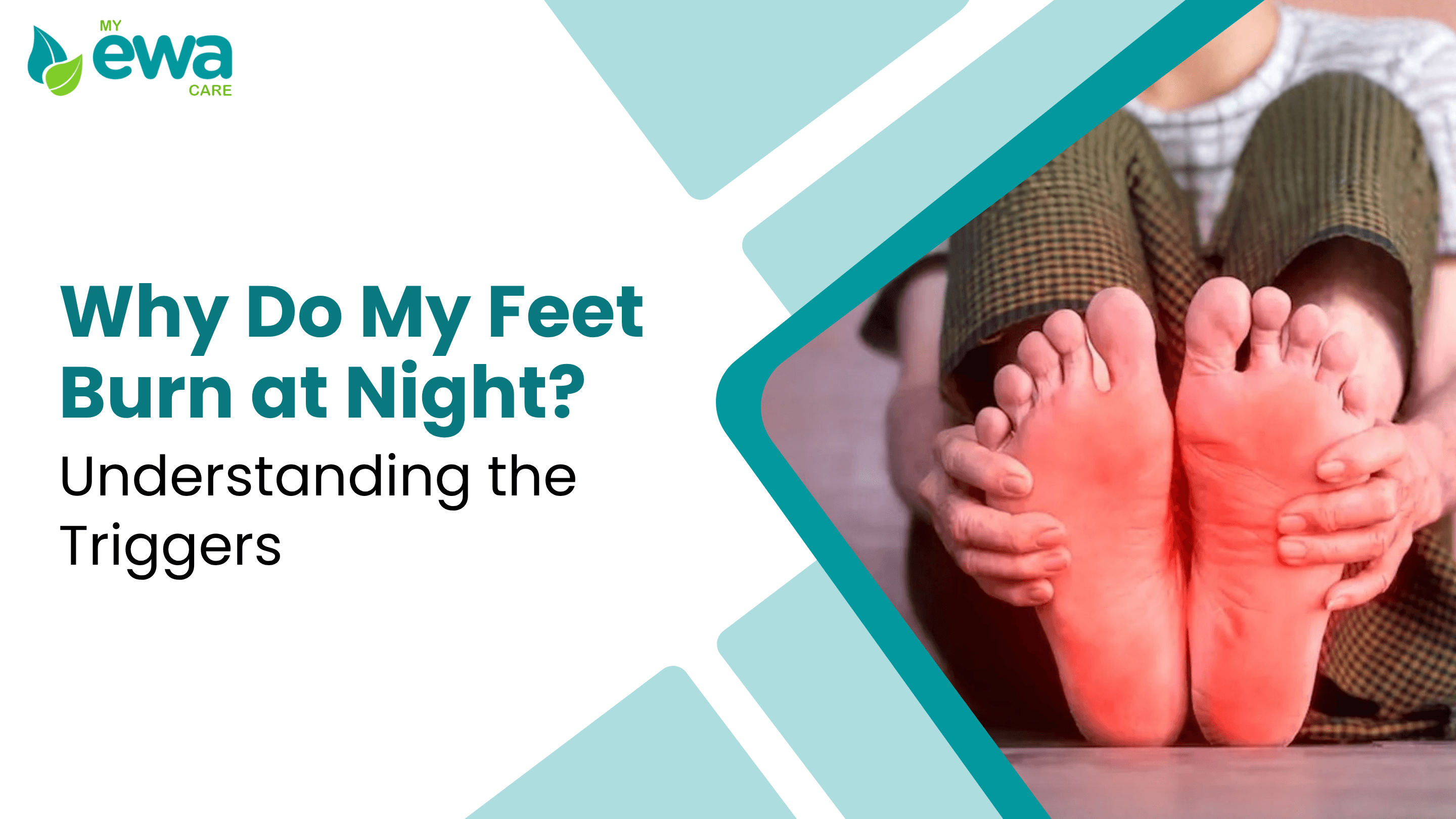
The Physical Experience of Intense Heat
There is a specific, distracting frustration that happens after you take off your shoes at the end of a long day, only to realize your soles feel unnaturally warm. This isn't just about the temperature of the room. A persistent burning sensation in the feet often feels like it is radiating from the inside out, making it difficult to relax or fall asleep. Rather than jumping straight into worst-case scenarios, taking a moment to understand why your nervous system is sending these physical signals is the first step toward getting comfortable again.
Decoding Symptoms of Burning Sensation in the Soles of the Feet and Fingers
When your body experiences sensory irritation, it can be difficult to clearly identify what’s really happening. Many people struggle to distinguish between surface-level warmth on the skin and a deeper, internal tingling or prickling sensation.
If you’re trying to understand the symptoms of burning sensation in the soles of your feet and fingers, it’s helpful to first evaluate your daily physical habits before assuming a serious medical condition.
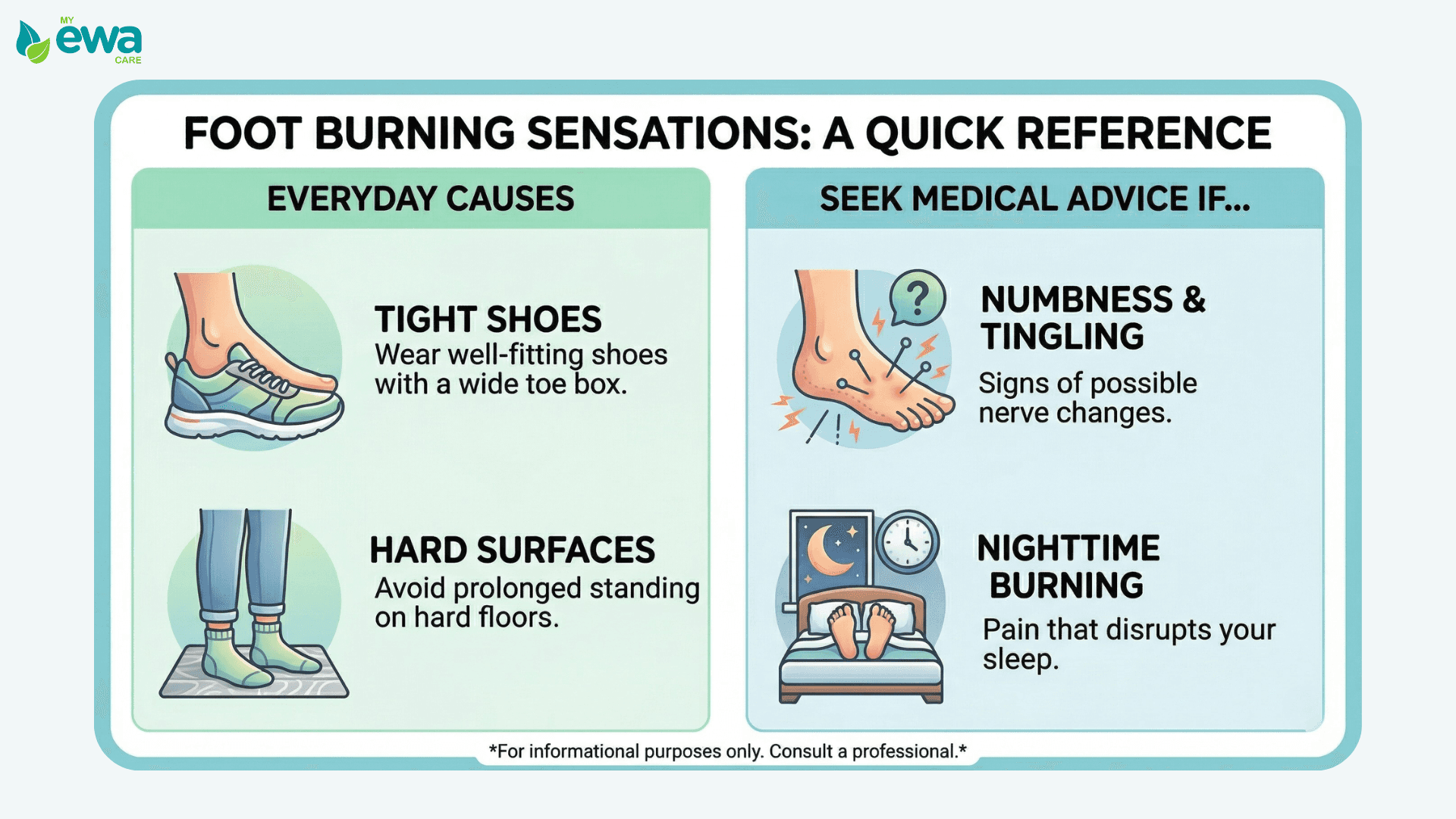
In many cases, these localized sensations are simply your nerves signaling stress or compression caused by everyday factors, such as:
Wearing tight or unsupportive footwear
Prolonged standing on hard surfaces
Poor posture while sitting or working at a desk
When a Hot Sensation in One Foot Causes Concern
Symmetry matters when evaluating physical discomfort. If you notice a hot sensation in one foot while the other feels completely normal, this asymmetry is actually a helpful clue. It usually points away from a systemic body issue and points directly toward a localized mechanical problem. A pinched area in your lower back, a specific way you cross your legs at your desk, or an uneven wear pattern in one of your shoes can easily irritate the nerves on just one side of your body.
Analyzing Causes and Reasons for Feet Burning Pain at Night
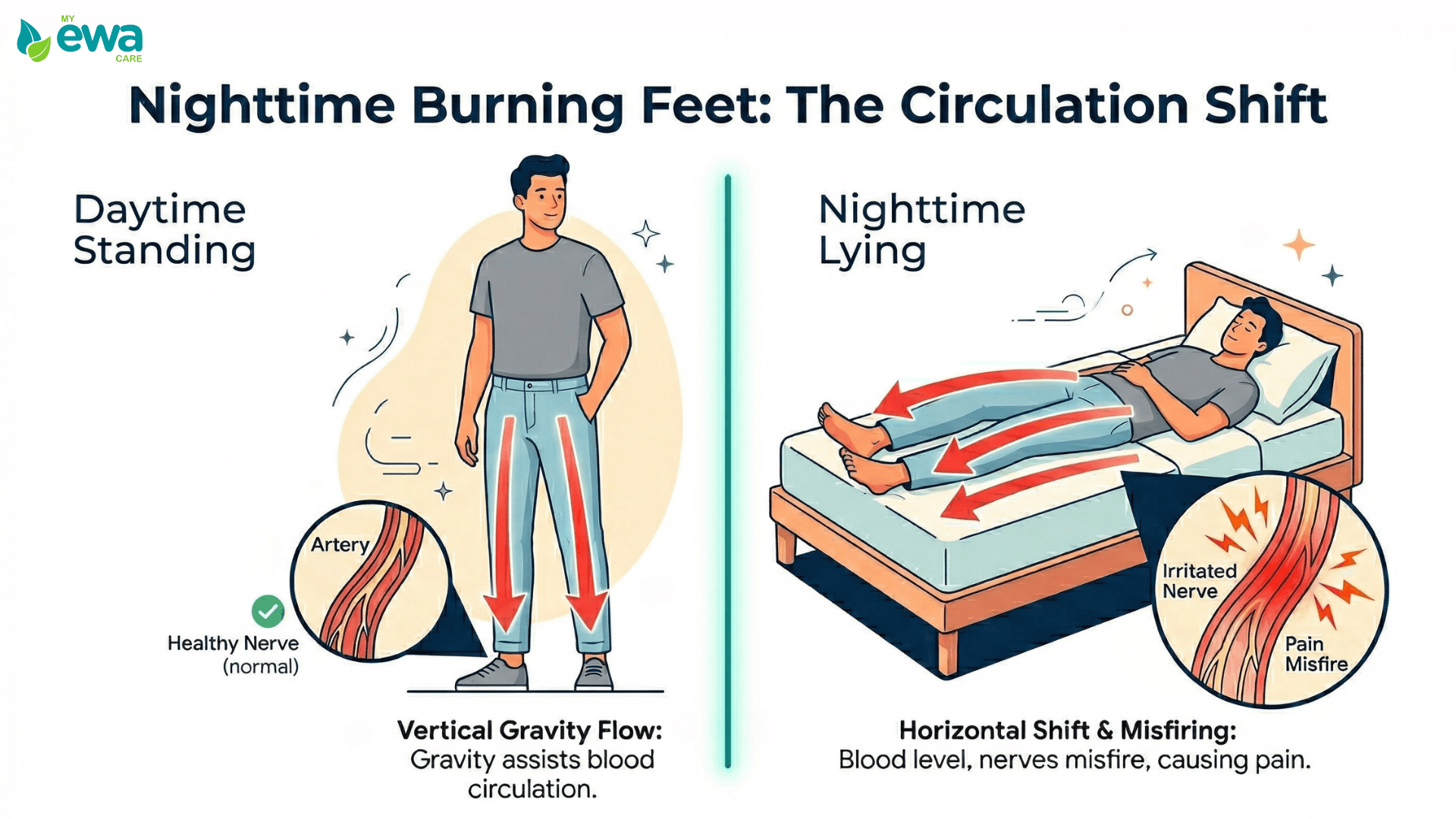
A very common question patients have is why these symptoms seem to peak precisely when they try to rest. The causes and reasons for burning pain in the feet at night are largely tied to how your circulatory system shifts when you lie flat. Throughout the day, gravity pulls blood down into your lower limbs. When you finally lie in bed, your heart rate drops and your circulation regulates. If your calf muscles are tight, this sudden shift in blood flow can cause the surrounding nerves to misfire, creating a flush of intense heat as the tissues attempt to recover.
Why a Numb Feeling in Feet and Toes is Often Misunderstood
In many clinical settings, a sudden numb feeling in the feet and toes is rapidly labeled with major medical terms like Diabetes or severe Neuropathy. While those are valid considerations, this rush to label means everyday triggers are frequently overlooked. The actual causes of tingling in the feet can be surprisingly basic. Some of the most common, yet frequently ignored, culprits include:
A simple Vitamin B12 deficiency.
Chronic, daily dehydration.
A lack of proper arch support in your everyday footwear.
Over-focusing on heavy diagnoses can cause unnecessary anxiety and prevent you from fixing the actual, simple root of the problem.
Determining When Your Symptoms Need a Structured Conversation
While minor prickling often fades with a change in footwear or better hydration, it is important to know when to stop observing and start acting. It is time to have a structured medical conversation if you notice any of the following:
Physical discomfort in your lower limbs that begins to travel upward past your ankles.
A sudden feeling of unsteadiness or a loss of balance when you walk.
A heat or tingling sensation that rapidly intensifies rather than fading after you rest.
Knowing the difference between a temporary nerve reaction and a symptom that requires professional attention keeps you in control, helping you navigate your health journey until you are completely relieved.
How to Cure Feet Burning: Treatment and Medicine Options Without High Costs
When the discomfort persists, the immediate instinct is to search for a fast fix. However, choosing the right treatment and medicine options for curing the burning feet problem should not mean instantly booking expensive, hospital-grade nerve scans.
Those advanced diagnostics often provide complicated data that doesn't actually change your daily comfort. True healing is far more cost-effective. Starting with basic, affordable foundational checks; like a simple blood panel to review your nutritional gaps that often helps to provide the exact information needed to restore your nerve health without draining your wallet.
Preparing for Your Visit: Which Doctor to See for Burning Feet
If you decide that a professional opinion is necessary, go into the appointment with intention. Many people are unsure about which doctor to see for burning feet, which can lead to wasted co-pays. Consider these guidelines when booking your appointment:
Podiatrist (Foot Specialist): This is your best starting point if your symptoms feel heavily tied to the way you walk, the shape of your arches, or your daily footwear.
Neurologist (Nerve Specialist): This is the better fit if the sensations are widespread, entirely unaffected by your shoes, and accompanied by physical weakness.

Always ask the specialist how their proposed tests will alter your recovery plan before agreeing to them.
Actionable Relief for Specific Situations
Are there natural remedies and relief for burning feet problems?
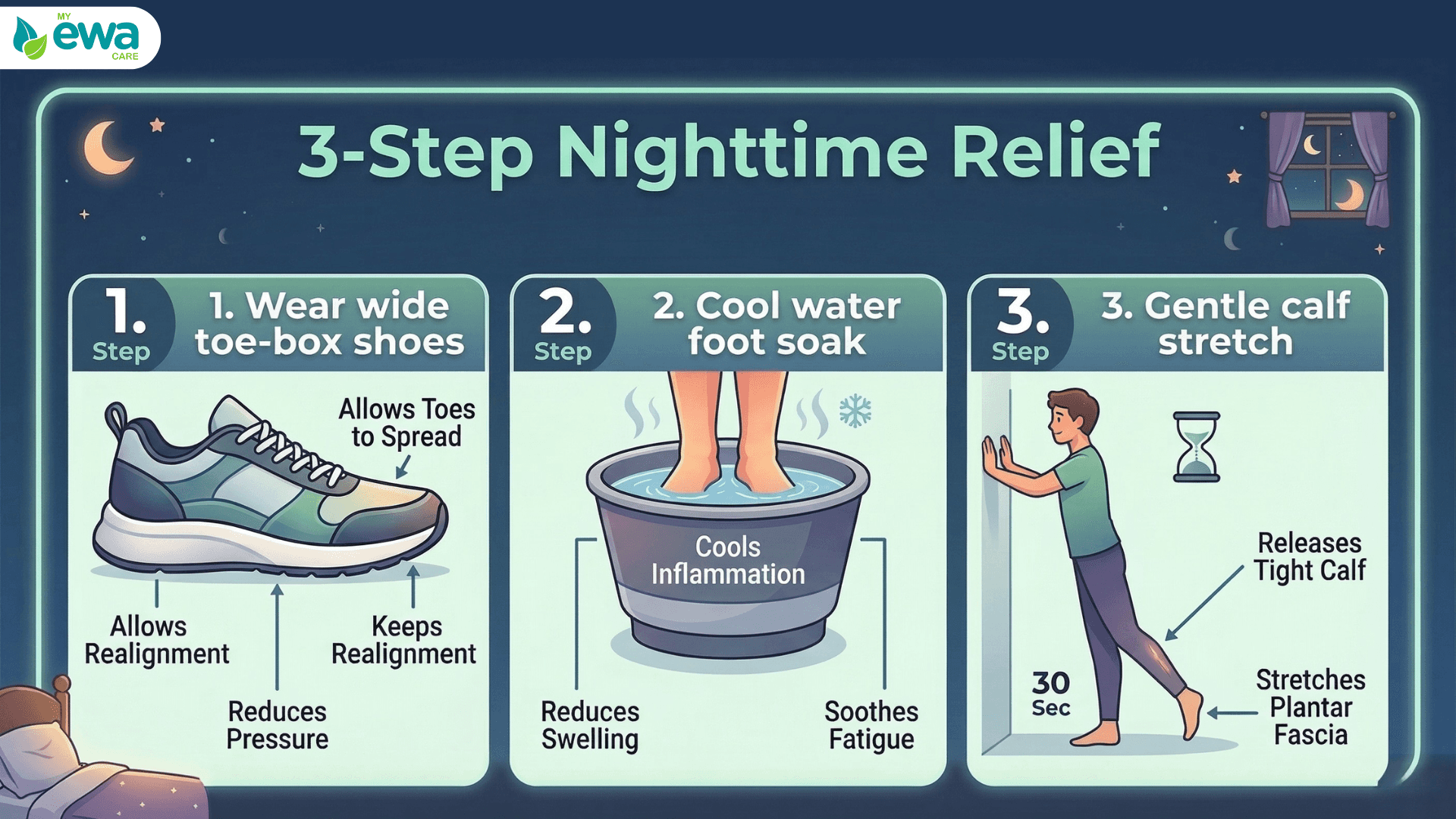
Yes, focusing on non-invasive adjustments is highly effective. Excellent ways to find natural remedies and relief for burning feet problems without immediately relying on prescriptions include:
Ensure your shoes have a wide toe box to prevent daily nerve compression.
Soaking your lower legs in cool (not ice-cold) water rapidly calms the nerve endings.
Practicing gentle calf stretches before bed to improve blood flow and reduce night-time misfires.
Why do my feet burn in winter or cold weather?
This is a very common physical reaction to temperature changes. The feet burning in winters comes down to your blood vessels. When you transition from freezing outdoor air into a heated indoor room, the blood vessels in your toes expand rapidly to warm the tissue. This sudden rush of blood creates a strong, temporary prickling or hot flush.
Managing feet burning syndrome and hot sensations during pregnancy?
The causes of feet burning syndrome and hot sensations during pregnancy are typically linked to natural bodily changes rather than a disease. The additional weight and natural fluid retention that occurs during pregnancy put significant pressure on the vascular system and nerves in the legs, leading to these uncomfortable but common feelings.
Addressing the burning soles of the feet in elderly individuals?
As the body ages, the thick, natural fat pads that cushion the bottom of the feet begin to thin out. This loss of physical padding means there is less shock absorption when walking on hard surfaces, which is one of the primary reasons for burning soles of the feet in elderly populations. Supportive, cushioned indoor footwear can make a massive difference.
Speak to a Care Manager for guidance before your next steps.