You finally hit the pillow after a ridiculously long day. The room is quiet. Then it happens. That uncontrollable urge to move your legs starts creeping in. It is incredibly frustrating when your body refuses to settle down just as you desperately need to rest. Naturally, your mind might jump to worst case scenarios. You might start searching for symptoms online and quickly convince yourself you have a severe case of restless leg syndrome. Take a deep breath. Before you spiral into panic or book an expensive hospital scan, let us look at what is actually happening. There is a very logical and calm way to figure this out.
Decoding the Nighttime Sensation in Your Lower Body
Many folks describe this as a creepy crawly feeling in legs at night that makes sitting still feel like literal torture. Since it is such an intense physical sensation, your brain easily links it to permanent nerve damage. Or maybe terrible circulation. But here is the truth.
Experiencing this evening urgency does not automatically mean your nervous system is failing you.
It is often just a temporary physical reaction to daily stressors rather than a scary chronic illness.
Understanding this difference is your very first step to getting your evenings back.
When you realize your body is simply sending a signal that needs translating instead of a warning about a major disease, finding peace becomes much easier.
Figuring Out Who to Call When Symptoms Persist
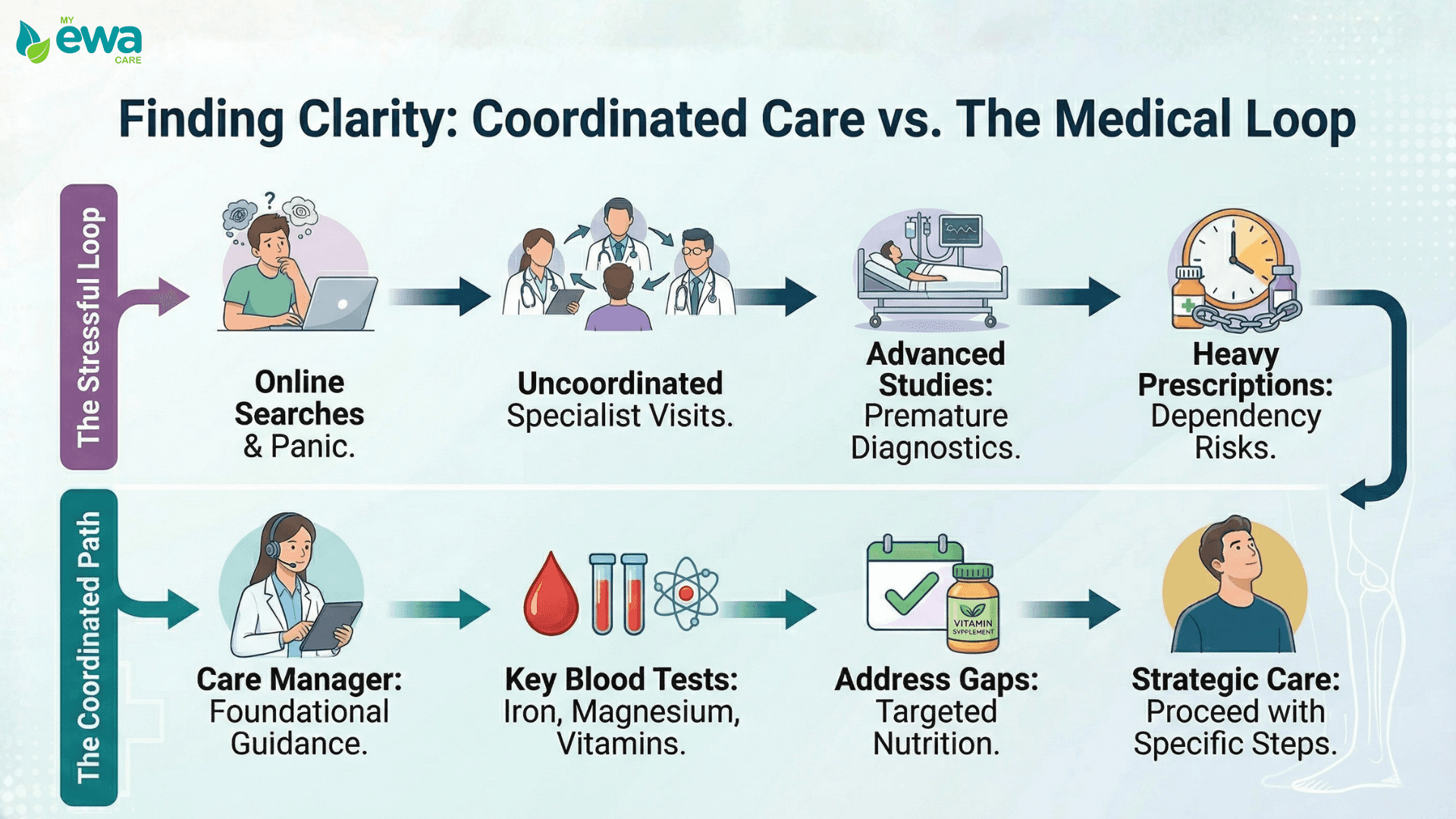
Discomfort that hits right at bedtime but feels like a nerve issue is super confusing. Who do you even call? You are probably looking online right now wondering whether you need a neurologist or sleep specialist for restless legs. Without clear advice, people get trapped in a frustrating medical loop.
They bounce around general doctors getting basic advice that only helps for a few days.
They visit random specialists to rule out totally unrelated sensory issues.
They schedule advanced clinics without knowing if they actually need that level of care.
This scattered approach just led to conflicting opinions and wasted money on consultation fees. A coordinated plan stops this cycle entirely.
Bypassing Premature Diagnostics and Heavy Prescriptions
When looking into methods for calming the urge to move your legs, the internet pushes you toward intense clinical stuff. It is easy to find yourself asking, do I need a sleep study for restless legs just to get some decent sleep? While specialized care has its place, jumping straight to heavy medical interventions is rarely the smartest first move. Look out for these common premature steps.
Agreeing to an expensive overnight hospital stay before looking at your basic daily habits is a big one.
Taking strong prescriptions right out of the gate is another, which only masks the real problem.
Relying on nerve numbing pills or heavy sleep aids actually delays true healing.
Giving yourself a moment to step back creates a much healthier path to feeling better.
Why Pausing for Foundational Lab Work Makes Sense
Before you agree to specialized hospital clinics or brain scans, check out your baseline health first. Simple and affordable blood tests for restless leg syndrome can pinpoint easily fixable issues that are causing all your symptoms. Look into these foundational elements.

Doctors know all about the link between iron deficiency and restless legs, so checking your ferritin ensures your muscles get the oxygen they need.
Magnesium levels are super important since hidden deficiencies often cause evening muscle tightness.
Certain vitamin imbalances could be the hidden trigger behind your nighttime discomfort.
This practical approach keeps your wallet safe from unnecessary medical bills while giving you clear data.
Key Inquiries to Make Before Agreeing to a Path Forward
Coming prepared for a doctor appointment puts you in the driver's seat.
Are there specific mineral panels we should check first? See if they can run basic blood work for iron, magnesium, or Vitamin D before doing anything complicated.
Could my daily habits be causing this? Ask if your afternoon coffee, late night screen time, or current daily pills might be triggering the evening's discomfort.
How will a specialized clinic actually change my routine? If they suggest an overnight evaluation, ask exactly how the results will alter what you do at home.
Frequently Asked Questions
Exactly how to soothe restless legs at night without taking medication?
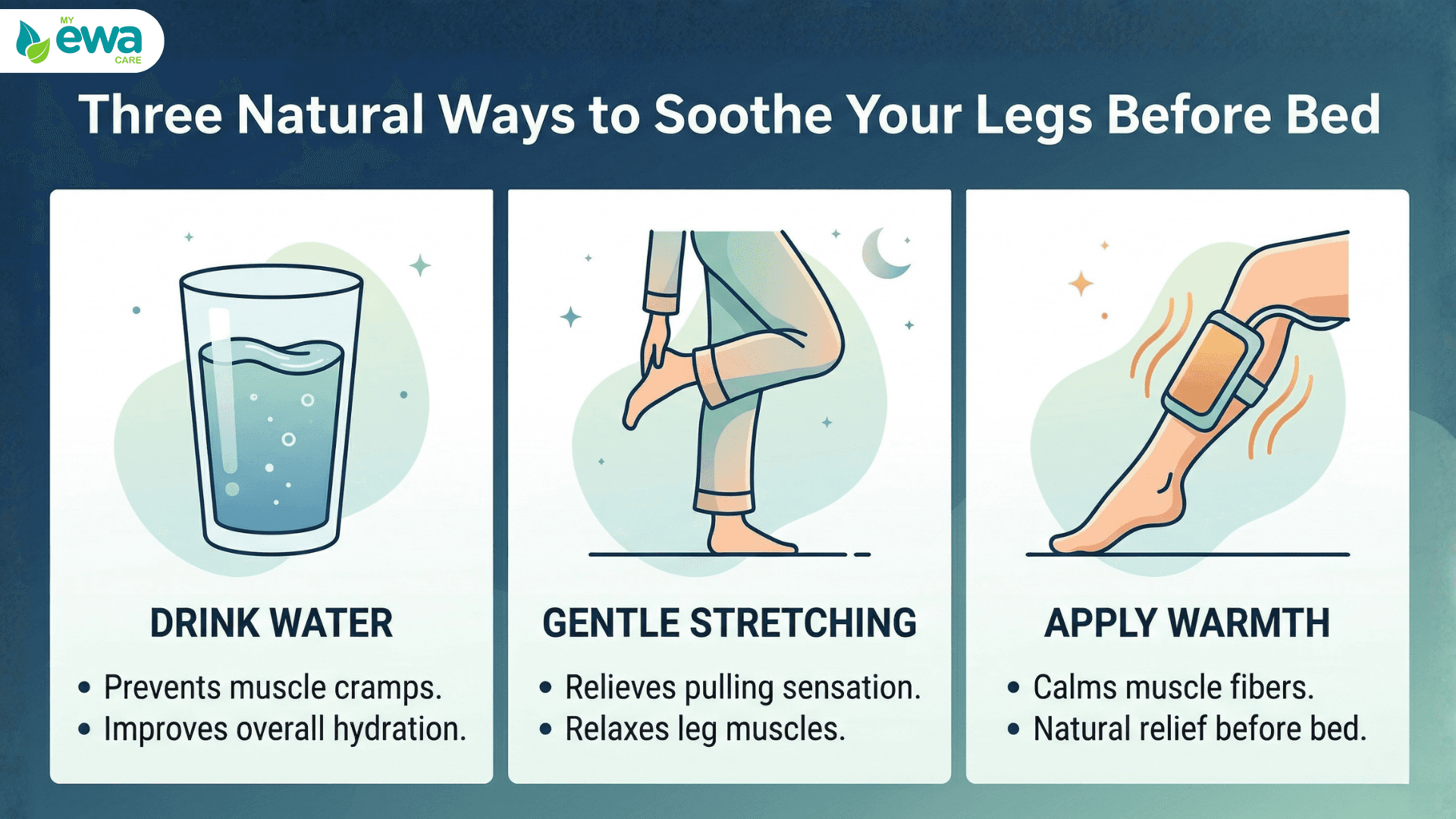
Getting up and moving works wonders. Walking around your bedroom, doing some light calf stretches, or soaking in a warm bath can ease that pulling sensation so your muscles can finally relax before you get back into bed.
Can dehydration make these evening leg sensations worse?
Yes. Skipping water throughout the day leads to muscle fatigue. That can definitely amplify the urge to move your lower body during the night. Drinking enough water is a vital foundational step.
Is it helpful to use a hot compress for restless leg syndrome?
Absolutely. Putting a warm heating pad on your calves before lying down relaxes the muscle fibers. It gives you natural relief without needing heavy medical interventions.
Speak to a Care Manager for guidance before the next steps.