How to Handle Recurring Vertigo Symptoms | MyEwaCare
A vertigo relapse can be scary. Learn how to handle recurring vertigo symptoms, understand your triggers, and find relief with a dedicated Care Manager.
How to Handle Recurring Vertigo Symptoms When They Come Back
Vertigo can be scary at any time, but when symptoms come back after getting better, the fear typically gets worse. A lot of people say that a vertigo relapse is worse than the first episode since it generates questions that are hard to address. What caused the dizziness or spinning feeling to come back? Is variation a sign that something has changed? Is it time to do something different?
Recurring vertigo symptoms often change, unlike diseases that become worse in a predictable fashion. The sensation's characteristics, its triggers, and the recovery process may vary from one incident to another. The inconsistency is frequently what really worries people, not the symptom itself.
Knowing this pattern can help you make better decisions and lower your stress levels.
Why did my vertigo come back?
People naturally think that symptoms they are used to would act the same way every time. That anticipation doesn't happen very often with vertigo. One episode may be short and easy to deal with, while another may feel long and more disturbing. When things are different, it can seem like something new or important is happening.
Yes, BPPV can come back if you are wondering. There are several things that can affect feelings of dizziness and Benign Paroxysmal Positional Vertigo (BPPV), and these things don't always stay the same. Sleep problems, tiredness, stress, changes in habit, and short-term changes in the body can all affect how symptoms are felt. Even small changes can change how intense an episode is.
Several everyday factors can trigger or worsen recurring vertigo symptoms. The infographic below highlights some of the most common triggers.
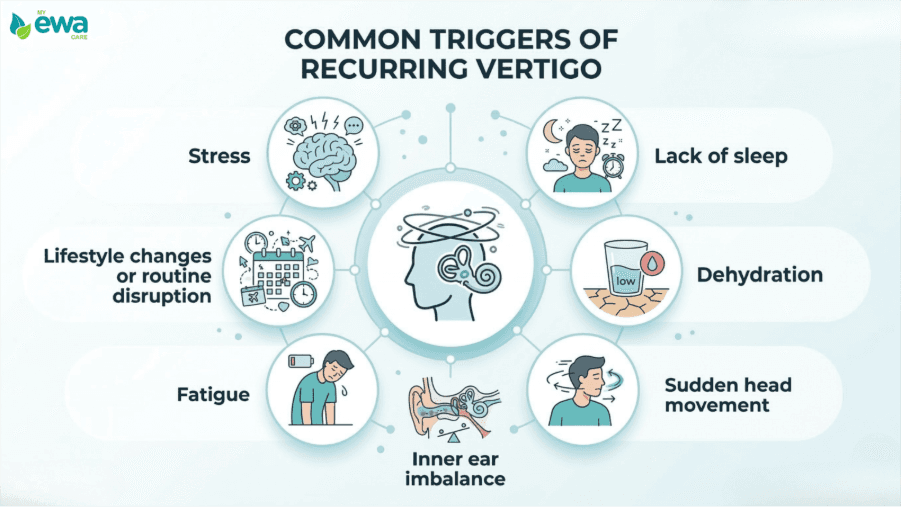
The problem is generally not the illness itself, but the fact that there isn't a distinct, repeated pattern.
What Is a Typical Duration of a Vertigo Relapse?
When vertigo reoccurs, people are constantly repeating the same thoughts and questions. They tend to stay the same and come from the true-doubt thinking.
Patients are constantly thinking:
How long does a vertigo relapse last this time?
Does getting dizzy for a long time mean your health is getting worse?
What is the difference between feeling dizzy and feeling like the room is spinning?
What does lack of vertigo mean for your vertigo and should every trigger of vertigo be noticeable?
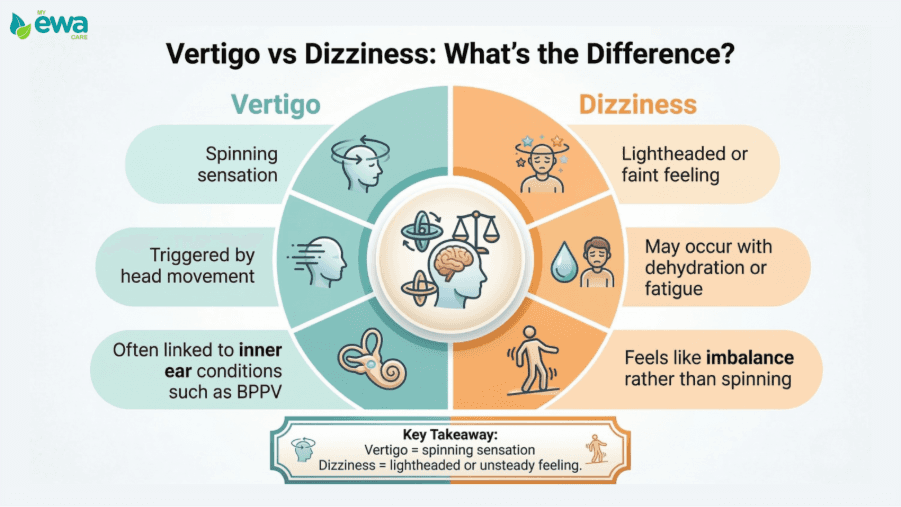
Many people confuse vertigo with general dizziness. The infographic below explains the key differences between the two sensations.
When symptoms come and go, looking for relief is totally normal. The uncertainty comes more from your mind than the discomfort from the sensation itself.
What to Do When Vertigo Returns: Helpful Actions
The return of vertigo symptoms understandably draws the attention of many looking for a quick explanation. There is no doubt that the circumstances have merit, but some actions may not always lead to better explanation.
Examples can include:
Obtaining more than one opinion on a matter, without a shared goal of healthcare navigation.
Repeating the same tests and getting the same results.
Making decisions in the health field from anxiety.
Considering each of these individually makes sense. Collectively, this pattern can create more confusion, more work, and more cost without a corresponding increase in insight.
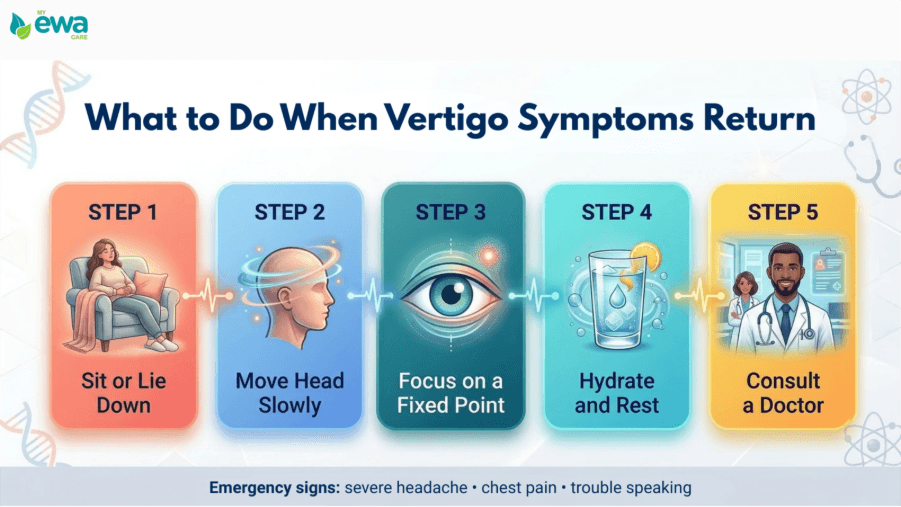
When vertigo symptoms return, focusing on simple and safe actions can help manage the episode more effectively.
Why There Still May Be Questions from the Tests
The common assumption is that tests and evaluations always give conclusive answers. The assessments regarding vertigo may not always correlate with people's experiences. People might not be able to describe episodes they experience. Some episodes are intermittent and called positional vertigo where episodes are affected by position. Some episodes are situational and can be influenced by temporary factors that are not easily caught.
Findings may be incidental or partially so. Finding something normal may be seen as an abnormal finding. More data does not mean you can easily resolve uncertainty.
It's not always true that information and understanding have a direct correlation. More data may not be able to resolve uncertainty.
A More Reliable Way to Make Decisions About What to Do Next
When chronic dizziness or vertigo symptoms come back, it's easier to make decisions when you focus on your goals instead of how urgent they are. Taking a little break to think about the situation again can frequently give you a new point of view.
Things to think about that might assist include:
What specific issue needs to be made clearer right now?
Would this step change the plan of action as a whole?
Are the symptoms changing or getting worse?
Decisions made with a purpose in mind typically stop pointless investigations from happening. This is when healthcare coordination comes in handy. It helps you plan instead of just reacting to symptoms.
How Doing the Same Thing Over and Over Again Quietly Adds to the Burden
Physical feelings alone do not define recurring vertigo episodes. Repeated examinations, follow-ups and investigations can slowly add stress to your life in terms of logistics, money and mental health.
This load often comes from having to do the same thing twice, having too many consultations, or taking actions that create information without a clear goal. Cost clarity doesn't depend on how many steps are taken; it depends on how much each step adds to the value.
Recognising this dynamic early can help stop things from getting worse.
A More Relaxed View on Symptoms That Come Back
Recurrent vertigo symptoms can be bothersome because they don't follow a set or expected pattern. Just because something is different doesn't mean it's becoming worse. Knowing this difference might make you feel lot more stable and surer about what to do next.
It normally feels better to take a moment to stop and gather information than to rush into quick reactions.
Before you do anything else, speak to a Care Manager for professional medical advice and help with your healthcare.
Frequently Asked Questions About Recurring Vertigo
Are there any exercises that can help keep vertigo from coming back?
Yes, some head motions and physical therapy can assist, but it depends on why your dizziness came back. A care manager can assist you discover the correct professional to help you find the right movements for your body instead of doing random workouts at home.
When should I go to the hospital for dizziness that comes back?
A common vertigo relapse is not usually an emergency, but you should trust your gut. If your dizziness suddenly comes with a bad headache, chest pain, or trouble speaking, you should get help right once. If your symptoms vary often, a healthcare navigator can help you figure out if you need to see a doctor more often.
Can not drinking enough water or eating the wrong foods make you dizzy?
Absolutely. Relapses can happen quickly if you don't drink enough water, don't get enough sleep, are under a lot of stress, or make sudden changes to your diet. A great, low-stress first step to treating your symptoms is to drink enough water and pay attention to your everyday behaviours.
Is there a way to get rid of chronic vertigo for good?
Managing vertigo is usually more about figuring out what makes it worse for you than finding a quick treatment. This is because vertigo is a symptom, not a singular ailment. With the correct medical advice and a clear plan, these episodes can happen a lot less often and be a lot easier to deal with.