Constant Ringing in Ears: Decision Clarity Before Scans
Constant Ringing in Ears: Decision Clarity Before Scans
Waking up with a constant ringing, buzzing, or hissing in your ears is exhausting. Because no one else can hear it, it is easy to feel isolated and anxious. That panic often leads to late night Google searches, rushed decisions, and eventually, expensive hospital tests that might not even give you the answers you need.
If you are feeling lost right now, take a deep breath. This guide is here to help you slow down, understand your options, and find relief without spending a fortune on unnecessary medical bills.
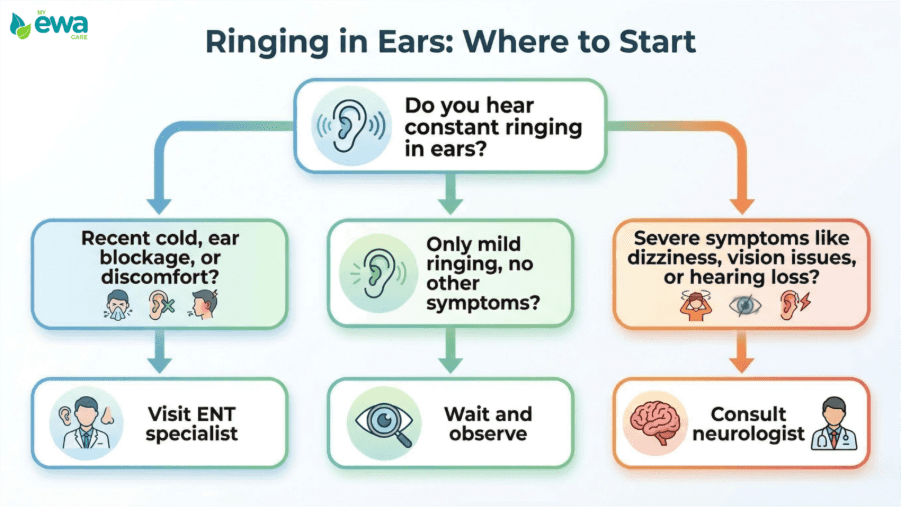
Put this Caption right under the image (centre oriented):A simple guideto decide whether to visit an ENT or neurologist for constant ringing in ears.
Neurologist or ENT for Ringing Ears? Figuring Out Where to Start
When the noise will not stop, figuring out who to call can feel just as stressful as the symptom itself. It is entirely normal to be confused about exactly which doctor to consult for ringing in ears.
A lot of people immediately panic, assume the worst about their brain, and try to book a neurologist. But in most cases, your safest and most affordable starting point is an Ear, Nose, and Throat specialist (ENT).
An ENT will look for simple physical issues first, like trapped fluid or a stubborn earwax blockage. If they check your ears and everything is physically clear, then they can tell you if a neurologist is needed. Also, figuring out the "constant ringing in right ear meaning" compared to a noise in both ears really matters. A specialist helps you decode these clues safely, keeping you away from scary internet searches.
Is an MRI Necessary Right Away? Navigating Early Tests
When we are anxious, we naturally want the biggest and most advanced test available just to be safe. But rushing to book an expensive brain scan is a common trap you should avoid.
So, is an MRI necessary for ringing ears right away? Usually, no. If your only symptom is mild ringing, and you are not dealing with severe dizziness or sudden vision loss, jumping straight into an MRI machine will likely just drain your bank account without actually changing how you manage the issue.
It is also smart to avoid quick fixes. Buying random ear drops online or starting heavy sleep medications before you know what is going on will just mask the root cause.
Temporary Ringing vs. Persistent Sensory Changes: When to Actually Worry
Because this is a symptom and not a disease, temporary issues get over diagnosed all the time.
Things like a recent cold, sinus pressure, or even just a loud concert can cause temporary changes. Yet, people constantly mistake these for permanent nerve damage. Even bad posture, tight neck muscles, and high stress can be the exact reason you keep waking up with ringing in ears.
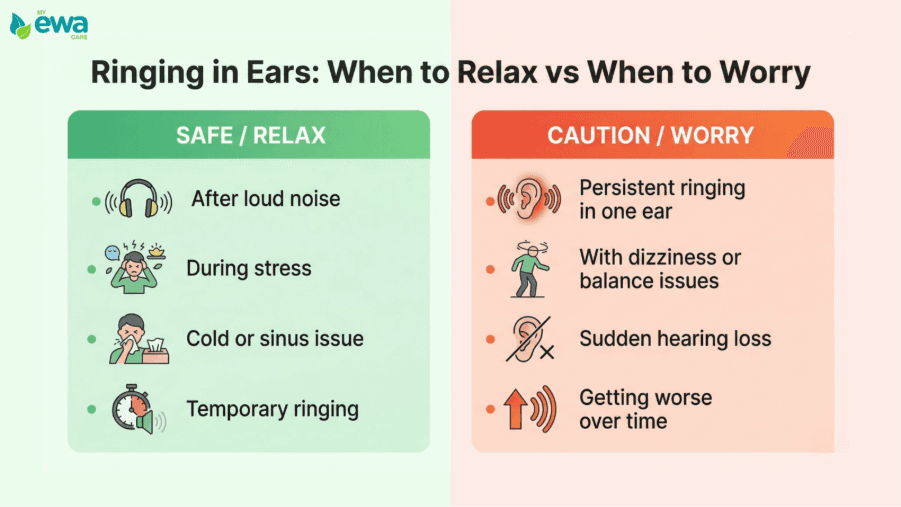
Put this Caption right under the image (centre oriented):Key signs to understand when ringing in ears is temporary and when to seek medical attention.
Before you assume the worst, try a wait and watch approach. Notice if the noise gets louder when you are stressed or have not slept well. Giving your body a few days to settle down is often the best and safest first step.
Understanding Hearing Test Costs and Avoiding Premature Scans
Getting better should not mean going broke. You can protect your savings by starting with the basics.
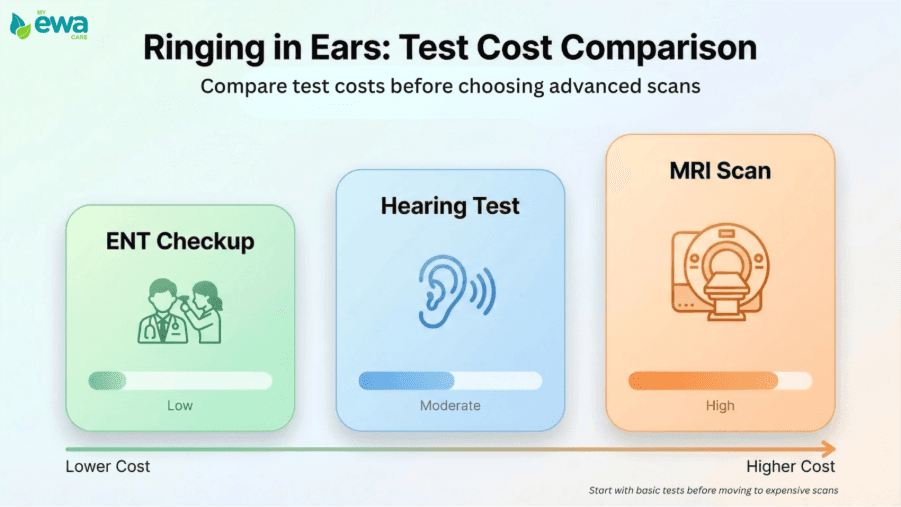
Put this Caption right under the image (centre oriented):A visual comparison of ENT checkups, hearing tests, and MRI scan costs for ringing in ears.
Before you start wondering what tests are done for ringing in ears, just get a basic and affordable physical ear exam. If your doctor does recommend a more detailed audiogram, pause and ask about the hearing test for ringing ears cost. Make sure you understand exactly how that specific test will change your care plan before you pay for it.
Also, keep all your medical records in one place. Sharing your past reports with a new doctor means you will not have to pay to take the exact same test twice.
Questions to Ask Before Committing to a Care Plan
Before you say yes to any scans, procedures, or daily medications, take control of the conversation. Ask your doctor these exact questions:
What is the real purpose of this specific test?
What happens if we just wait and watch for a week?
Are there simpler lifestyle changes like stress management or sound therapy we can try first?
How will the results of this test change my daily healing plan?
Frequently Asked Questions (FAQs)
Why does the ringing seem louder at night?
During the day, everyday background noises help mask the sound in your ears. At night, turning on a fan or using a simple white noise app on your phone can easily help blend the sounds and bring you immediate relief.
Can drinking coffee affect the ringing?
Yes, for many people, high amounts of caffeine or heavy salt intake can temporarily make the ringing feel louder. Gently cutting back on your extra cups of coffee and drinking more water is a great way to see if your symptoms soften.
Will this noise eventually stop completely?
Very often, yes. If the noise started after a brief illness, a loud event, or high anxiety, it is highly likely to fade away naturally as your body recovers.
Can I get a second opinion without paying for new ear tests?
Absolutely. If you already paid for a basic physical ear check or a standard hearing test, simply gather your existing reports and share them with a new specialist to avoid duplicate fees.