Neuro & Sensory Symptoms: How to Find Clarity | MyEwaCare

Understanding Neuro & Sensory Symptoms Before Next Steps
Migraines are a common example of how neuro and sensory symptoms fluctuate in ways that are difficult to interpret.
Specifically, Neuro and sensory symptoms such as recurring headaches, dizziness, sleep disruption, ringing sensations, or unusual nerve feelings often raise more questions than answers. What makes them difficult isn’t always their intensity, but the uncertainty around what they mean and whether something needs to be done next.
Many people reach this point not because symptoms have just started, but because they haven’t resolved in a way that makes sense. That uncertainty is usually what triggers the search for clarity.
Why These Symptoms Often Feel Hard to Interpret
Neuro and sensory symptoms don’t follow a neat timeline. They can appear suddenly, fluctuate, ease for a while, or return without a clear trigger. Because of this, people often receive different interpretations at different moments.
One professional may focus on ruling things out. Another may focus on reassurance. Reports may look acceptable on paper while the experience itself continues to feel disruptive. This mismatch is what creates confusion, not necessarily the symptom itself.
Understanding that this lack of clarity is common can already reduce some of the pressure to act immediately.
What People Are Often Confused About With Neuro & Sensory Symptoms
Across neuro and sensory concerns, a few patterns come up repeatedly:
Symptoms overlap across different possibilities
Reports don’t always explain how someone feels day to day
Advice changes as symptoms fluctuate
Reassurance doesn’t always settle the concern
When information doesn’t clearly answer “What does this mean for me?”, people are left unsure whether they should wait, act, or seek another opinion.
That uncertainty is often more uncomfortable than the symptom.
Common Unnecessary Steps People Take When Answers Feel Incomplete
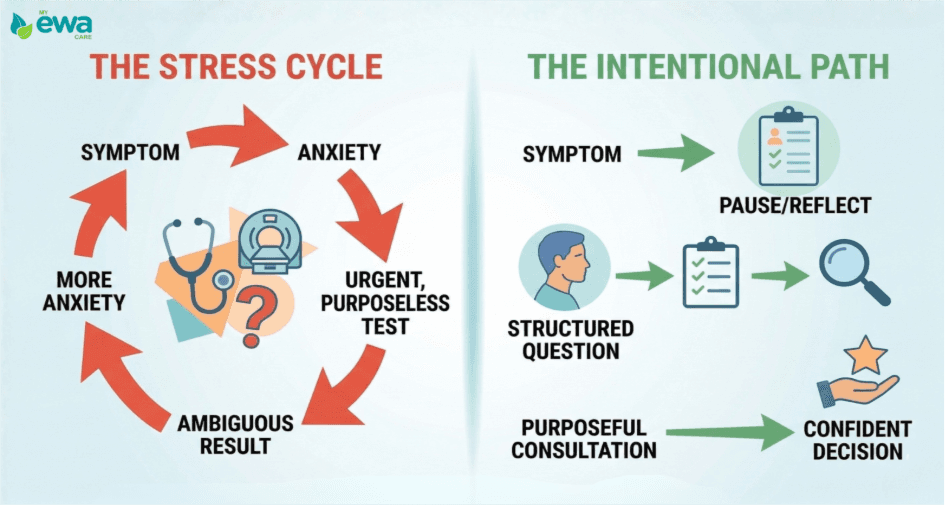
When symptoms don’t make sense or answers feel incomplete, people often take steps just to feel like they’re doing something. These actions usually come from unresolved uncertainty rather than urgency, and while they may feel reassuring at the time, they don’t always add clarity.
This can look like:
Proceeding with tests without being clear on what they’re meant to clarify
Seeking multiple opinions without a shared question
Repeating steps when symptoms return or change
Each step can seem reasonable on its own. Over time, however, this pattern can add effort, stress and expense without improving understanding.
When Information Adds Noise Instead of Clarity

More information doesn’t always mean more insight. Some findings reflect changes that are common or incidental and may not explain the symptoms being experienced. When results don’t clearly connect to how someone feels, they can create more questions than answers. This often leads to further steps that don’t change decisions but increase worry and uncertainty.
Recognising this gap helps people avoid assuming that more automatically means better.
A More Useful Way to Think About Next Steps
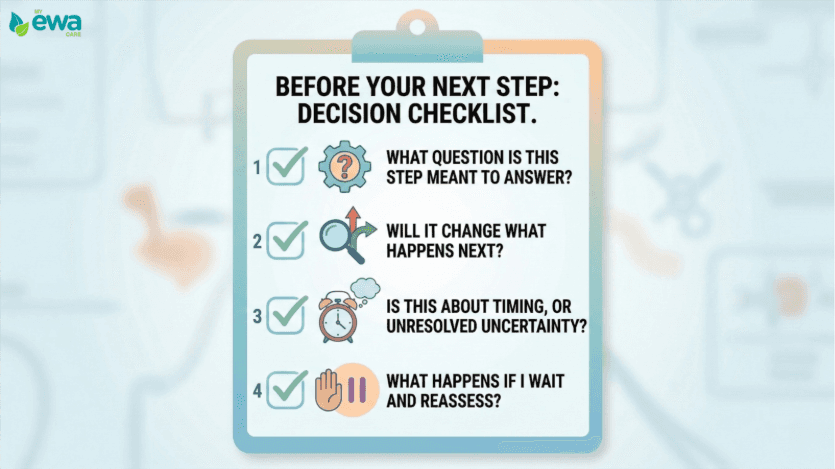
Decisions feel more manageable when they’re guided by purpose rather than urgency. Before moving ahead, it can help to pause and consider:
What question is this step meant to answer?
Will it change what happens next?
Is this about timing, or about unresolved uncertainty?
What happens if I wait and reassess?
These reflections don’t delay care; they help ensure that the next step actually adds value.
How Unnecessary Costs Quietly Build and How to Avoid Them
Cost isn’t only about prices. It builds through repetition, such as repeating tests, consultations, or follow-ups without gaining new clarity.
When steps are taken without a clear purpose, time, energy, and money can be spent without moving closer to understanding. Cost clarity comes from knowing what a step adds, not just what it involves.
Intentional decisions tend to reduce unnecessary cycles and the strain that comes with them.
When Pausing Is the More Responsible Choice
Pausing doesn’t mean ignoring symptoms. It means recognising when acting immediately won’t necessarily provide better answers.
This can be especially relevant when:
Symptoms aren’t worsening
Results don’t clearly explain the experience
Advice feels inconsistent
The purpose of the next step isn’t clear
In these moments, slowing down can lead to better decisions later.
Conversations That Help Bring Confidence Back
Clear conversations often restore confidence when things feel uncertain. Helpful questions include:
What are we hoping to understand from this step?
How will this influence what we do next?
Are there other ways to gain clarity first?
Is it reasonable to pause and review before proceeding?
These discussions help align expectations and reduce the pressure to act without understanding.
Moving Forward With More Clarity
Neuro and sensory symptoms can feel unsettling, especially when answers aren’t immediate. Taking time to understand patterns, reflect on purpose, and seek guidance before escalation can make the path forward feel steadier and more intentional.
Common Questions About Interpreting Neuro & Sensory Symptoms
Q: Why are my neurological symptoms so hard for doctors to interpret?
A: As mentioned in our guide, neuro and sensory symptoms like ringing or dizziness, don’t follow a neat timeline. Because they fluctuate and reappear without clear triggers, different professionals may offer different interpretations at different moments.
Q: What should I do if my medical test results are normal, but I still feel unwell?
A: It is common for reports to look acceptable on paper while the physical experience remains disruptive. In these cases, pausing to reflect on what a next step is meant to clarify is more responsible than rushing into more tests.
Q: How do I know if a second opinion is necessary for my symptoms?
A: You should seek a second opinion when medical advice feels inconsistent, symptoms aren’t resolving, or you are unsure if a proposed test or surgery will actually change your outcome.
Q: Can seeking more information cause more medical confusion?
A: Yes. When information adds "noise" instead of clarity, it often leads to incidental findings that don't explain your symptoms. This creates a cycle of unnecessary steps and costs without improving your actual understanding.