What Your Fatty Liver Report is Actually Telling You
If you have just come back from a routine ultrasound and the report mentions grade 1 fatty liver, you are not alone. This finding is showing up in scan reports across India more often than ever, frequently in people who feel completely fine and have no obvious health complaints. The unfamiliar terms, the grading system, and the uncertainty about what comes next can leave anyone feeling confused about fatty liver diagnosis, and a second opinion is often the simplest way to find clarity.
This guide is meant to help you understand what your report actually means, what is normal to feel confused about, and how to approach your next steps with clarity rather than panic.
Fatty Liver Grade 2 and Grade 1: Understanding What Each Stage Means
Fatty liver simply means that fat has built up in your liver cells beyond what is considered normal. A common question patients ask is how many grades of fatty liver exist and what they mean, since doctors use a grading system to describe how much fat has accumulated:
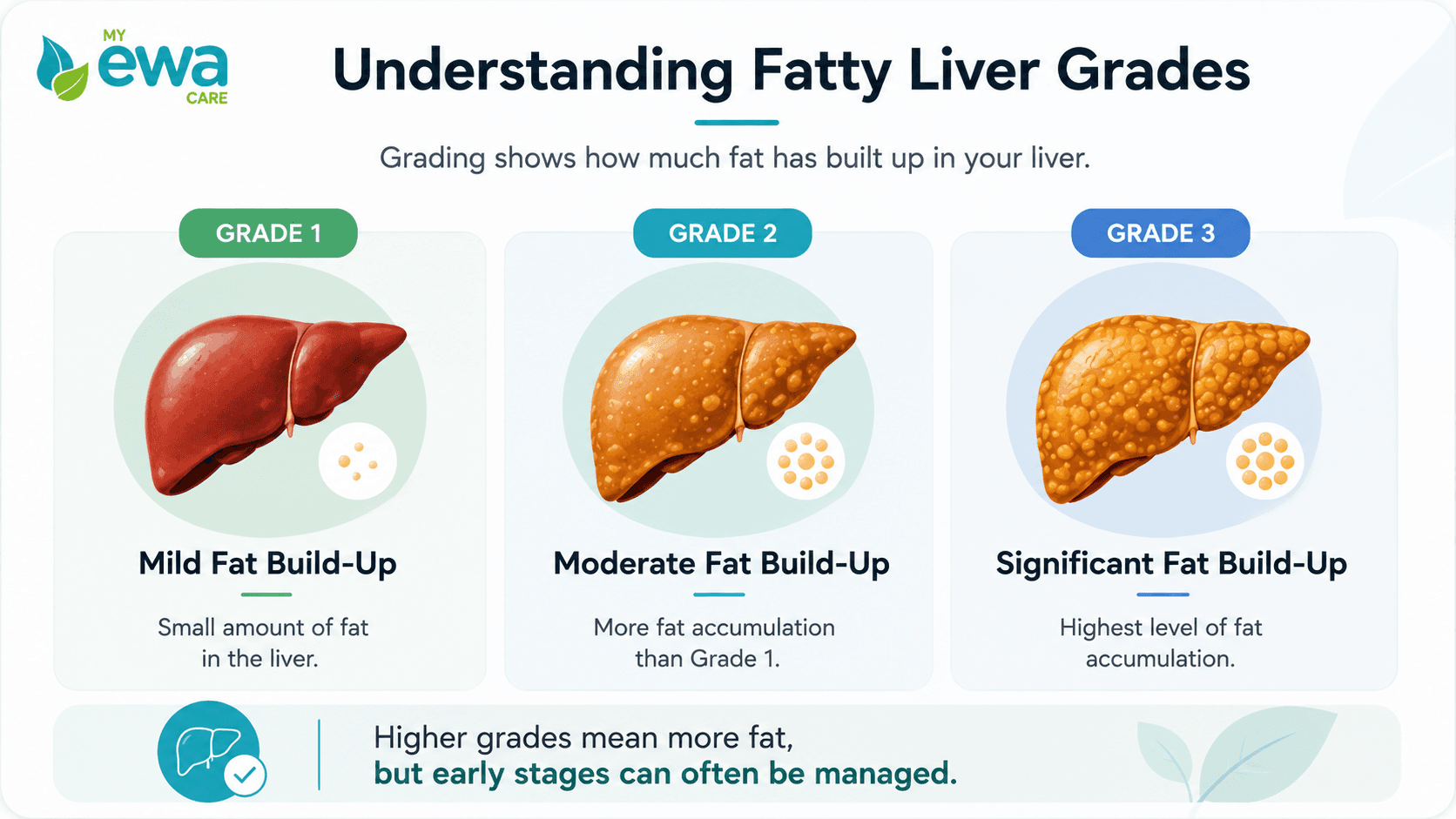
Grade 1 fatty liver - the mildest form, with a small amount of fat deposited and no significant inflammation or damage. Many people have no symptoms and discover it only during a routine check-up. Understanding grade 1 fatty liver symptoms and what it means is usually the first step to feeling less anxious about the report.
Fatty liver grade 2 - a moderate level of fat buildup. Some people begin noticing mild symptoms at this stage, though many remain symptom-free.
Grade 3 fatty liver - the most advanced of the three, where fat accumulation is significant and closer monitoring is generally advised.
A common question patients ask is whether fatty liver grade 2 is dangerous. In most cases, it is a sign that your liver needs support through lifestyle changes, not a marker of irreversible damage. Understanding which grade you have is the first step to making sense of what should happen next.
Early Symptoms of Fatty Liver Most People Brush Off
The symptoms of fatty liver are often mild, vague, or entirely absent. Many people only find out through an unrelated scan or blood test. When symptoms do appear, they typically include:
Fatigue or low energy throughout the day
A sense of heaviness or mild discomfort in the upper right side of the abdomen
Occasional bloating, sometimes alongside mild pain, which answers the common question of whether fatty liver can cause pain, bloating, and weight gain together
Unexplained weight gain, particularly around the midsection
Mild, dull back pain near the lower right ribs
In rarer, more advanced cases, mild yellowing of the eyes or skin, which is why fatty liver causing jaundice, bloating, or back pain together should always be checked rather than ignored
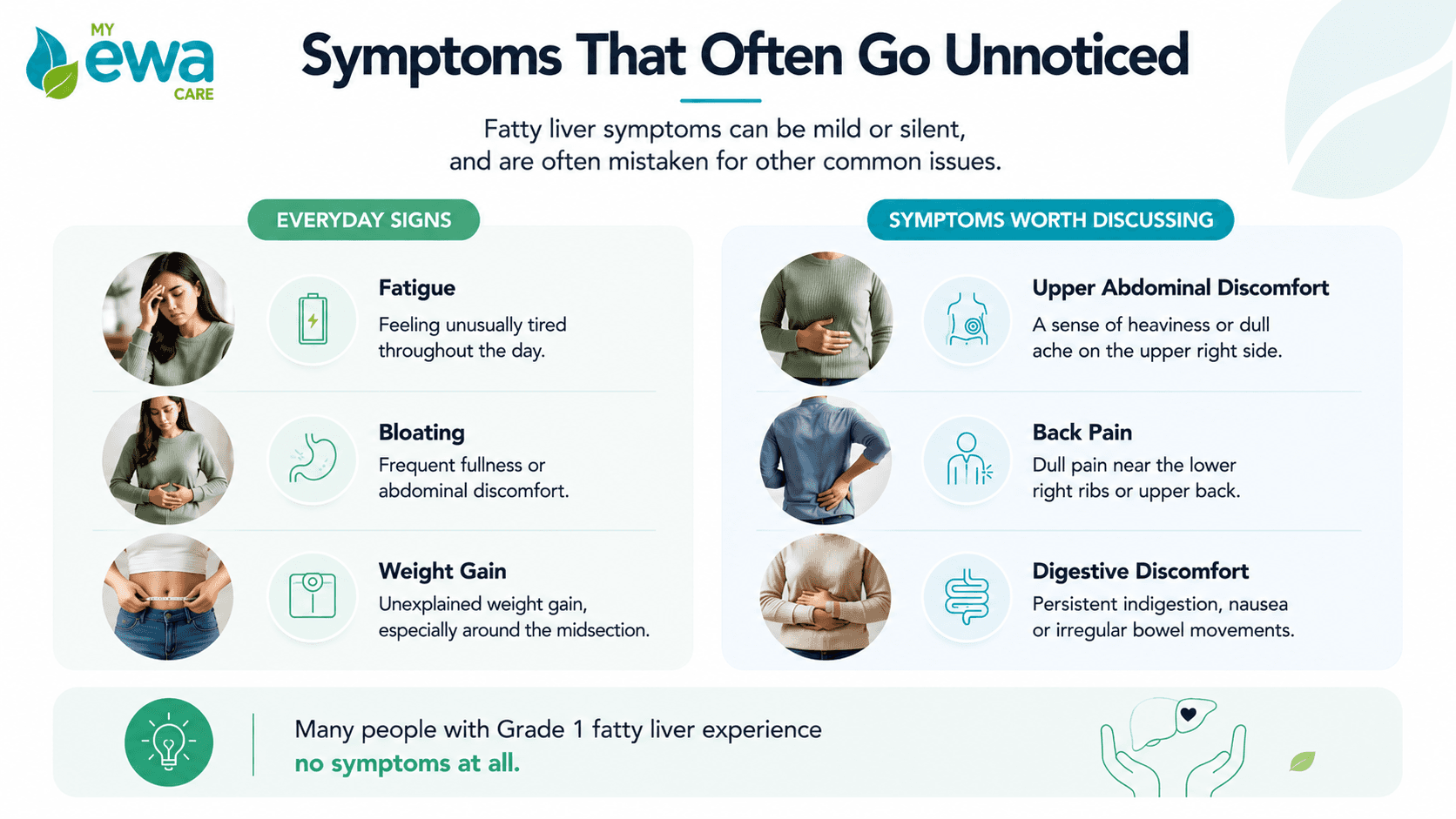
Early symptoms of fatty liver in females can sometimes overlap with hormonal imbalances, making them easy to dismiss. Irregular periods, fatigue, and weight fluctuations are sometimes the only early indicators, which is why women are encouraged not to ignore persistent tiredness or digestive discomfort.
These symptoms alone are not a cause for alarm, but they are worth mentioning to your doctor, especially if they persist.
Why a Fatty Liver Diagnosis Leaves So Many Patients with More Questions Than Answers
A fatty liver diagnosis often raises more questions than it answers, and that confusion is completely valid. Some of the most common questions include:
Can fatty liver cause cancer if left unmanaged? In rare cases, long-ignored fatty liver disease can progress to more serious liver conditions. However, grade 1 and grade 2 fatty liver on their own are not a cancer diagnosis and should not be treated as one.
Is fatty liver only caused by alcohol? Not at all. Conditions like diabetes, high cholesterol, and obesity are far more common contributors in India today.
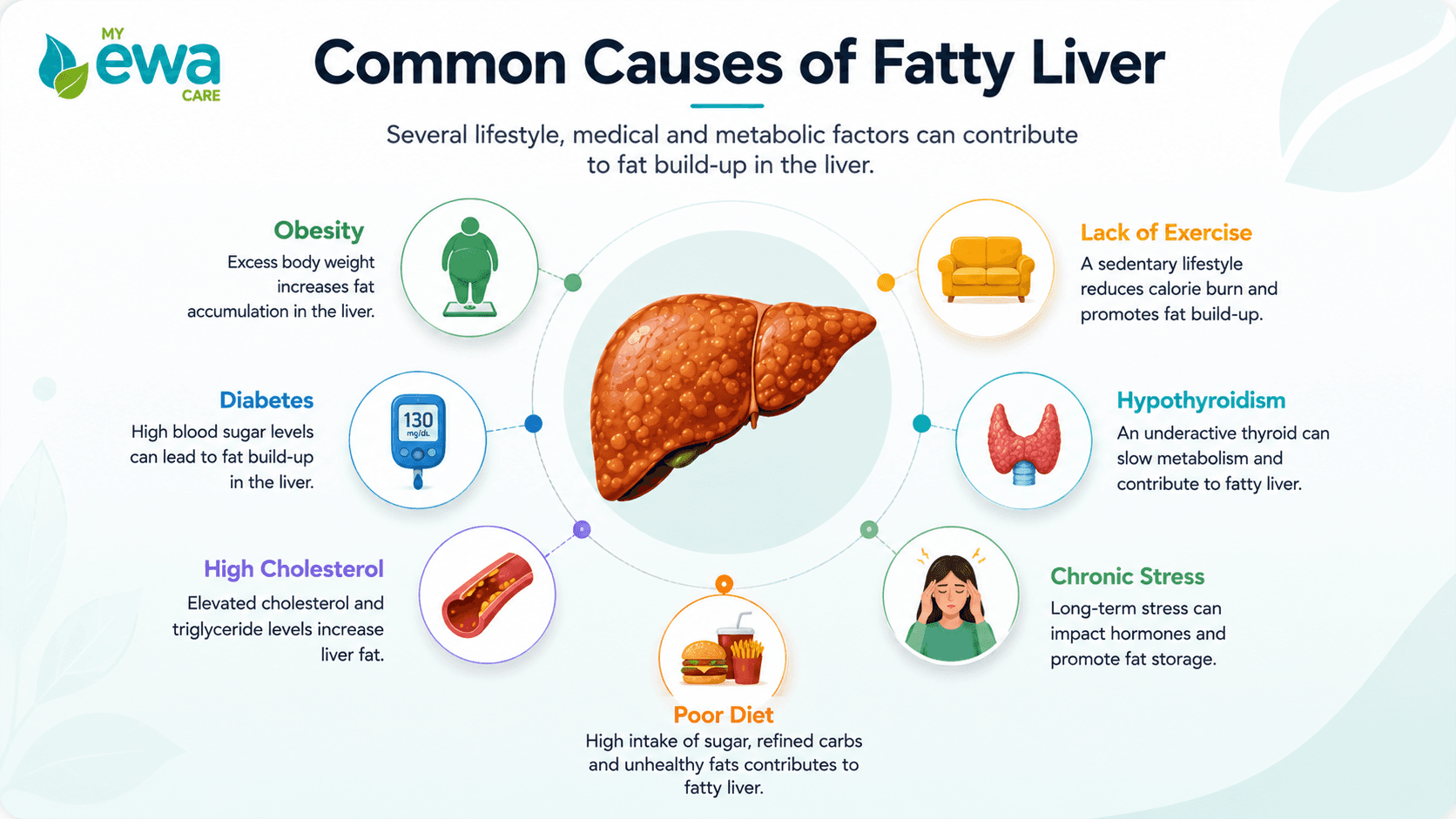
Can stress and thyroid issues cause fatty liver? Yes. There is a recognised hypothyroidism and fatty liver connection, since an underactive thyroid can slow down how efficiently your body processes fat. Chronic stress can also affect metabolism and contribute to fat accumulation.
Can fatty liver cause high blood pressure and diabetes? The relationship works both ways. Fatty liver is closely linked to insulin resistance, which means it can both result from and contribute to elevated blood pressure and blood sugar levels. This fatty liver, weight gain, and high blood pressure connection is one reason doctors look at your overall metabolic health, not just the liver alone.
If you find yourself confused about your fatty liver diagnosis and feel a second opinion might help, that is a completely normal and reasonable response, not a sign that something has gone wrong.
Common Mistakes Patients Make Right After a Fatty Liver Diagnosis
In the days following a fatty liver diagnosis, many patients unintentionally take steps that are unnecessary or premature:
Starting medication immediately, often based on advice from family or friends, before understanding the grade and cause of the condition
Jumping into restrictive diets or unverified home remedies without medical guidance
Assuming grade 1 fatty liver requires the same urgency as grade 3, leading to unnecessary anxiety
Requesting or agreeing to invasive procedures that are not needed at an early stage

It is entirely reasonable to ask whether grade 1 fatty liver can be healed without surgery, and in the vast majority of cases, the answer is yes. Surgical intervention is almost never the first or only option for early-stage fatty liver. Choosing to avoid unnecessary surgery for fatty liver and getting a second opinion first is a sensible and responsible step, not an overcautious one.
Is Your Fatty Liver Grade Really as Serious as it Sounds?
It is worth pausing to ask whether your specific fatty liver grade is genuinely as serious as it may initially sound. Ultrasound reports can sometimes use language that feels alarming, even when describing a mild finding.
The question of whether an ultrasound can detect grade 1 fatty liver accurately is a fair one. Ultrasounds are good at identifying the presence of fat but are less precise at measuring exact severity compared to more advanced tests like a fibroscan.
This means a grade 1 finding, or even a grade 2 finding flagged as a concern, is sometimes presented with more urgency than the situation warrants. Understanding what your grade genuinely indicates can help you separate a routine, manageable finding from something that needs closer medical attention.
Can Fatty Liver be Reversed and What Does Recovery Actually Look Like?
This is one of the most reassuring parts of understanding fatty liver: yes, can fatty liver be reversed is a question with a genuinely hopeful answer, particularly for grade 1 and grade 2.
The liver is a remarkably resilient organ. With consistent lifestyle changes, many people see meaningful improvement. A common follow-up question is how long it takes to reverse fatty liver naturally, and while this varies by individual, noticeable improvement is often seen within a few months of sustained effort, with more complete recovery sometimes taking six months to a year.
Here is what the fatty liver stages, symptoms, and realistic reversal time generally look like:
Grade 1 - the fastest and most complete recovery potential
Grade 2 - often improves significantly with sustained changes, though it may take longer
Grade 3 - requires closer medical supervision, as fat accumulation is more advanced and reversal, while still often possible, takes more time and consistent monitoring
A good fatty liver prevention and recovery guide typically centres on gradual, sustainable changes rather than drastic short-term fixes, since the liver responds best to steady, long-term habits.
Life Expectancy With Fatty Liver Disease: Separating Facts From Fear
It is natural to search for information on life expectancy with fatty liver disease after a diagnosis, especially when the condition feels unfamiliar and frightening.
The reassuring fact is that for the vast majority of people, particularly those with grade 1 or grade 2 fatty liver, this condition does not significantly affect life expectancy when identified early and managed with appropriate lifestyle support. What patients should know about fatty liver and life expectancy is that the outlook depends far more on early detection and consistent management than on the initial diagnosis itself.
It is only in cases where fatty liver is left unaddressed for many years, progressing through inflammation and scarring, that long-term health risks increase meaningfully. This is precisely why early guidance and informed decisions matter so much at the grade 1 and grade 2 stage.
Before You Decide on Any Next Step, Here is What Actually Helps
Getting the right guidance before proceeding with any test, medication, or procedure can make a meaningful difference. This is particularly helpful when:
You are about to start a new medication
Two doctors have given you conflicting advice
You are being advised to consider a procedure that feels disproportionate to your diagnosis
A medical second opinion for a fatty liver diagnosis is not about distrusting your doctor; it is about ensuring that the path forward genuinely matches the severity of your specific case. Choosing to seek a second opinion before surgery, or before committing to any significant intervention, is one of the simplest ways to avoid unnecessary surgery for fatty liver and ensure your next step is the right one.
Skip the Extra Tests: How to Avoid Unnecessary Costs While Managing Fatty Liver
Diagnostic costs can add up quickly if every available test is performed without a clear sense of necessity. Before agreeing to any test, it helps to ask:
How to test for fatty liver appropriately, whether at home through basic monitoring and follow-up blood work or at a clinic, rather than defaulting to the most expensive option available
Whether a basic ultrasound can detect grade 1 fatty liver adequately, or whether a costlier test like a fibroscan is genuinely necessary at your current stage
Whether monitoring alone is sufficient for now, instead of repeating diagnostics
What a particular test will actually change about your care plan
These are reasonable, cost-conscious questions that any good doctor should welcome.
What to Ask Your Doctor Before Agreeing to Any Test or Medication
Walking into a follow-up appointment with the right questions can make the entire experience feel far more manageable:
Which doctor to consult for fatty liver grade 2 specifically, since a general physician, gastroenterologist, or a dedicated fatty liver specialist may be the right fit depending on your stage, and knowing when to consult one of them can save unnecessary visits
What does my specific grade mean for me personally?
Are lifestyle changes alone likely to be sufficient?
What would happen if I chose to wait and monitor instead of intervening immediately?
Which enlarged liver symptoms, if any, mean I should see a specialist sooner rather than later?
Frequently Asked Questions
Does fatty liver cause weight gain, or does weight gain cause fatty liver?
The relationship can work in both directions. Excess weight, particularly around the abdomen, is one of the most common contributors to fat accumulating in the liver. At the same time, fatty liver can disrupt how the body processes fat and sugar, which may make weight gain harder to manage even with normal eating habits. This is why doctors often look at fatty liver and weight together rather than treating them as two separate issues.
Can you drink alcohol moderately if you have fatty liver?
This depends largely on whether your fatty liver is linked to alcohol use or not. For non-alcoholic fatty liver, many doctors recommend significantly limiting or avoiding alcohol altogether, since even moderate drinking can place additional strain on a liver that is already managing excess fat. For alcoholic fatty liver, avoiding alcohol completely is generally advised. It is best to get personalised guidance rather than assuming moderate drinking is automatically safe.
Can fatty liver be detected on an ultrasound that was done for a different reason?
Yes, this is actually one of the most common ways fatty liver gets discovered. Many patients are scanned for unrelated reasons, such as abdominal pain, a routine health check, or pregnancy-related monitoring, and the report incidentally mentions fatty changes in the liver. This is why so many people are caught off guard by the diagnosis, since they were not specifically being tested for it.
What is the difference between fatty liver stages and fatty liver grades?
Grades and stages are sometimes used interchangeably, but they technically describe different things. Grades, such as grade 1, grade 2, and grade 3, generally refer to how much fat has accumulated in the liver as seen on an ultrasound. Stages, on the other hand, often relate to disease progression, including the presence of inflammation or scarring, which usually requires more detailed testing beyond a standard ultrasound to assess accurately.
Does smoking or high cholesterol make fatty liver worse?
Both can contribute to fatty liver progressing more than it might otherwise. High cholesterol is closely tied to the same metabolic factors that lead to fat accumulation in the liver, while smoking can increase oxidative stress on liver cells, potentially making existing fat buildup more harmful over time. Managing these alongside any fatty liver diagnosis is often part of a more complete approach to liver health.
How much weight loss is typically needed to see improvement in fatty liver?
While this varies by individual, many doctors point to a loss of around 5 to 10 percent of body weight as a meaningful threshold where noticeable improvement in liver fat is often observed. The good news is that even modest, gradual weight loss, rather than dramatic or rapid changes, tends to be more sustainable and easier on the body, particularly for someone managing grade 1 or grade 2 fatty liver.
Still Unsure About Your Grade 1 Fatty Liver Report?
A fatty liver report does not have to feel like an emergency, but it also should not be ignored. If you are still feeling confused about your diagnosis or unsure about the right next step, getting a clear, unhurried second opinion can make all the difference.
Speak to a Care Manager for guidance before next steps.