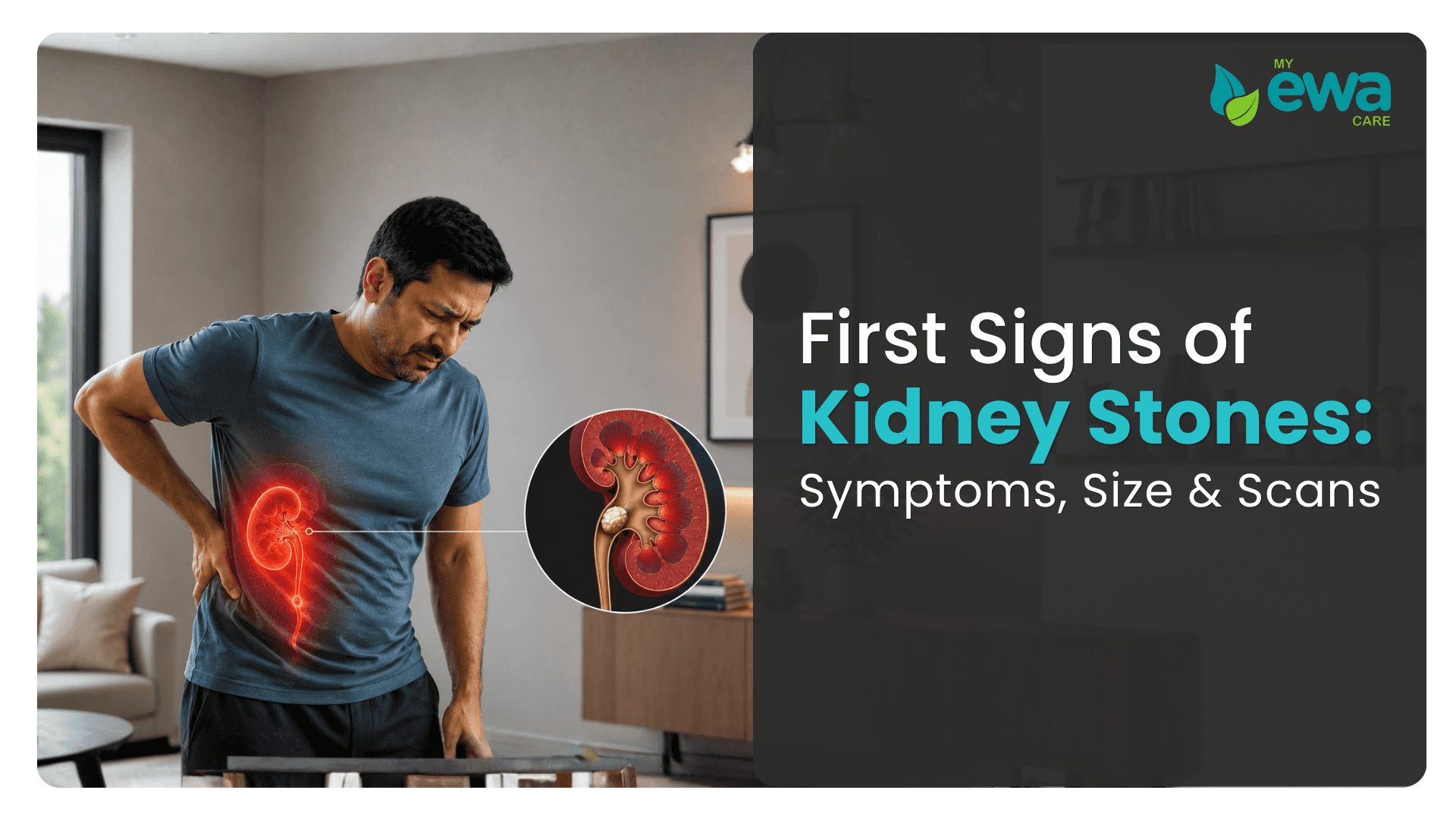
A patient-first guide to understanding digestive and metabolic conditions before your next step.
You have been feeling off for weeks. Your stomach is uncomfortable, your energy is low, and a recent scan has flagged something. You have seen two doctors, received two different explanations, and now you are sitting with a stack of reports wondering what to actually do next.
This is one of the most common experiences among people dealing with digestive and metabolic conditions. From early sign s of gastrointestinal disease to recurring gastroenterology symptoms that do not have a straightforward answer, the problem is rarely the condition alone. It is the uncertainty around what it means, what comes next, and how to avoid spending time and money on steps that may not help.
This guide is not about any single diagnosis. It is about how to think clearly before you proceed so that every decision you make is informed, coordinated, and genuinely in your best interest.
Why Gastroenterology Symptoms and Reasons for Gastric Problems Leave Patients Confused
Most people dealing with digestive or metabolic concerns do not lack information. They have too much of it and not enough clarity. Here is where the confusion tends to cluster:
The same symptoms, different diagnoses. A reason for gastric problems as straightforward as bloating or abdominal discomfort can lead to entirely different recommendations depending on which specialist you visit. Without a coordinated picture, conflicting advice is common and deeply frustrating.
Recognizing 10 signs of an unhealthy gut without knowing which one's matter for you. Generic symptom lists create anxiety without context. Not every sign warrants the same urgency, and understanding which symptoms are red flags versus functional patterns makes an enormous difference to how you proceed.

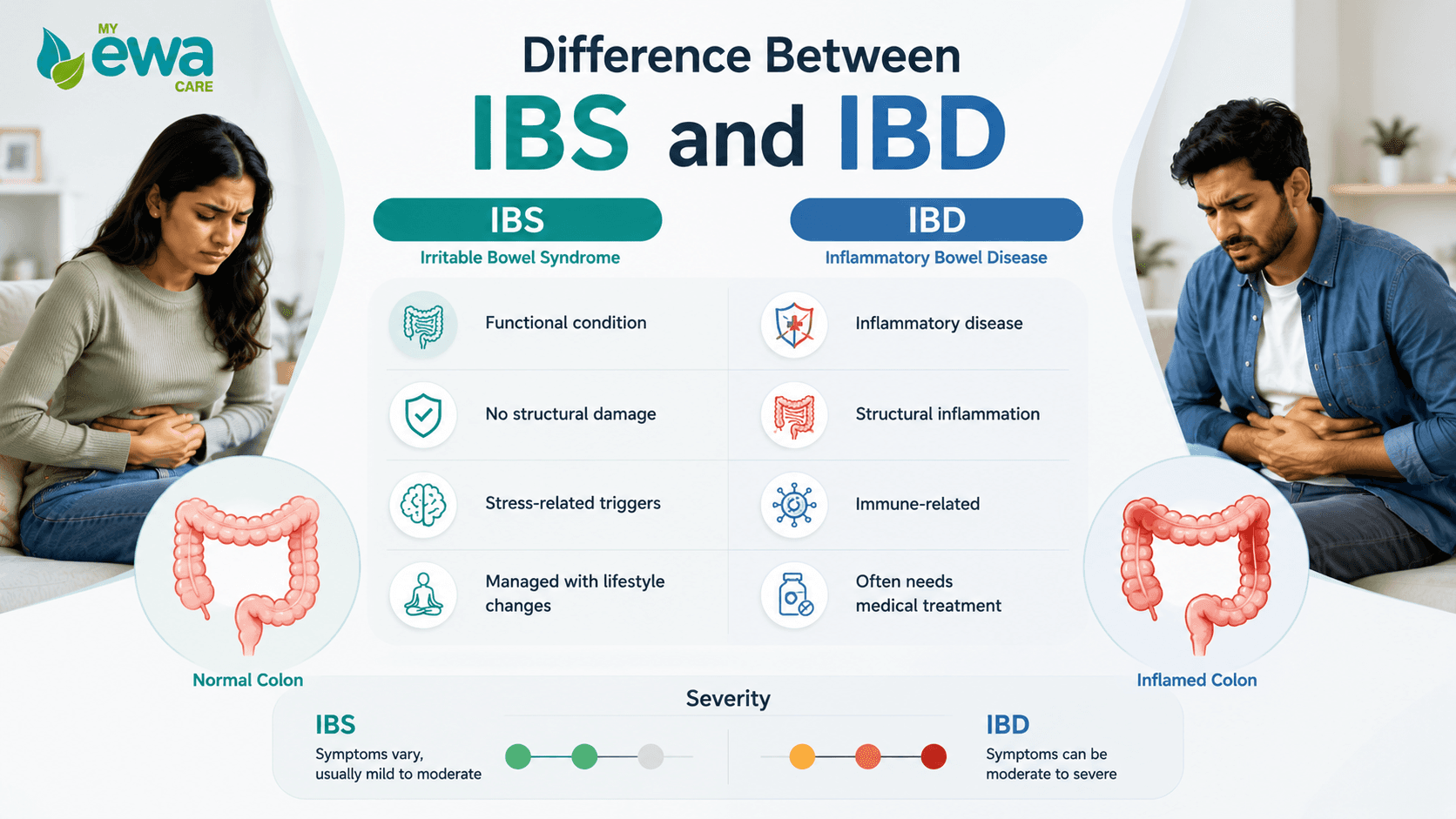
The difference between IBS and IBD. This is one of the most misunderstood distinctions in digestive health. Irritable bowel syndrome is a functional condition. Inflammatory bowel disease is structural and immune-mediated. The difference between IBS and IBD matters enormously because the care paths are completely different, yet patients are regularly shuffled between the two without clear explanation.
Why symptoms return after medication. Many digestive conditions are driven by lifestyle, diet, stress, and sleep. Medication manages the symptoms but does not always address the root cause. When the underlying driver is not identified, the cycle continues regardless of what has been prescribed.
Whether a scan finding needs immediate action. An incidental finding on an ultrasound such as a fatty liver, a small stone, or a mild wall thickening does not automatically mean something urgent is happening. Patients are rarely given the context to understand this, and anxiety drives premature decisions.
Unnecessary Diagnostic Services to Avoid in Digestive and Metabolic Care
A significant part of what makes digestive healthcare confusing and expensive is not the condition itself. It is the sequence of decisions around it. These are the patterns worth recognising before you agree to the next step:
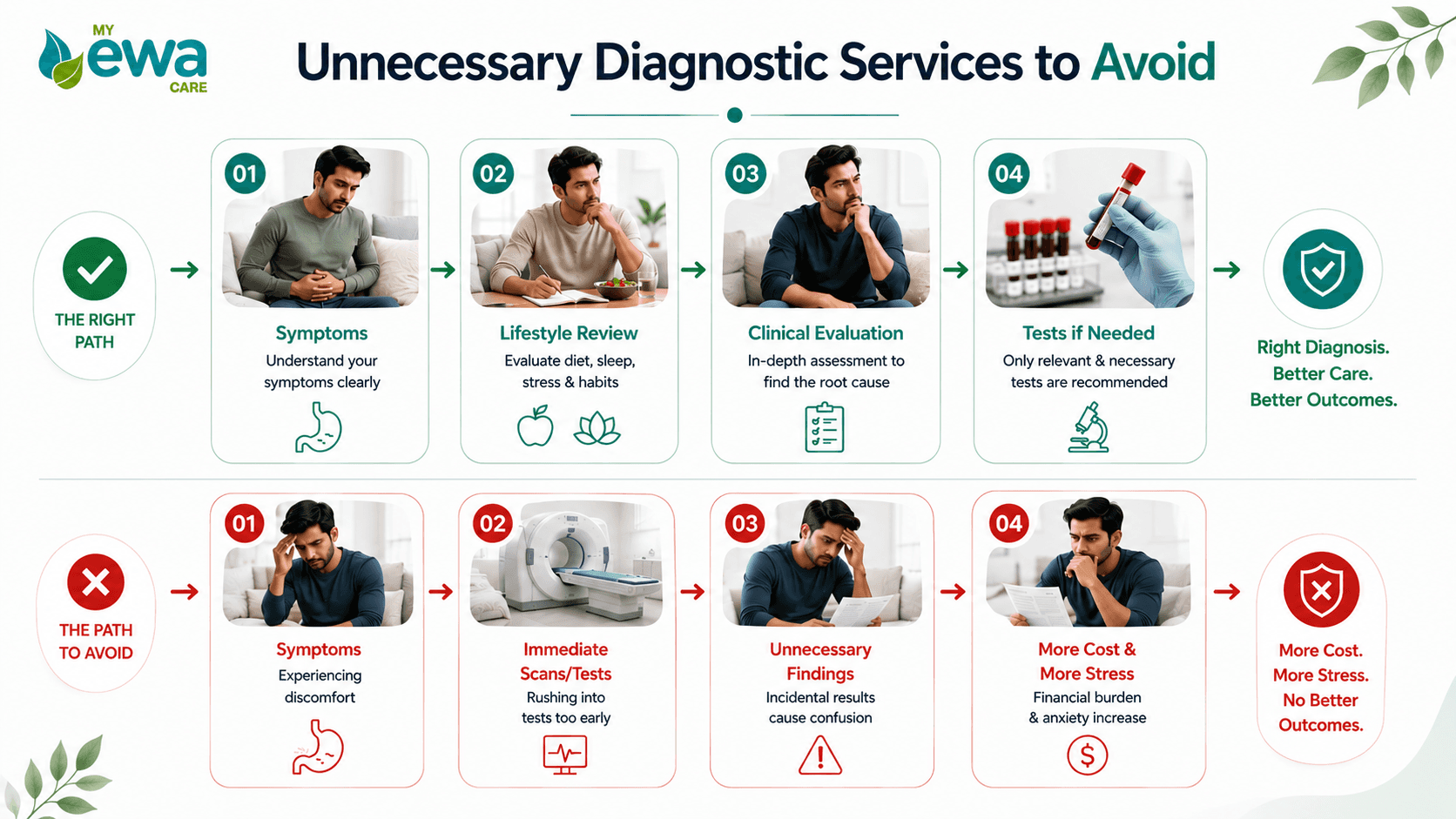
Imaging before the clinical picture is complete. Knowing when to use diagnostic services for stomach pain depends on what has already been evaluated clinically. Scans ordered before a proper history has been taken often generate more questions than answers and more follow-up investigations.
Endoscopy or colonoscopy as a first response. Both are important procedures with clear indications. They are frequently scheduled for symptoms such as mild reflux, altered bowel habits, and generalised bloating that would respond to structured dietary and lifestyle guidance first. Understanding the specific clinical reason before agreeing to a scope is a reasonable and important step.
Long-term medication without a review plan. Antacids, proton pump inhibitors, and antispasmodics are among the most commonly over-prescribed medications for digestive conditions. Many patients begin them during a flare and remain on them indefinitely without a defined review point or reassessment.
Multiple specialists without coordination. Visiting a gastroenterologist, hepatologist, and general surgeon independently without a shared record or a coordinating review leads to duplicated tests, contradictory advice, and a fragmented care experience. Consolidating what you already have before starting fresh with each new specialist is one of the most effective ways to avoid unnecessary diagnostic services.
Can Fatty Liver Be Reversed? What Patients Get Wrong About Gastrointestinal Findings
One of the most important things to understand about digestive and metabolic health is that a finding on a report is not the same as a diagnosis requiring immediate action. These are the most commonly over-labelled findings:
Grade 1 fatty liver. Can fatty liver be reversed? In most early-stage cases, yes, through structured dietary change and weight management over three to six months. The liver has a strong capacity for healing when dietary patterns and lifestyle are addressed early. Yet Grade 1 fatty liver is frequently presented as a serious liver condition requiring medication or urgent specialist referral, creating unnecessary anxiety and cost.
Asymptomatic gallstones or small kidney stones. Gallstones without surgery and kidney stone management without surgery are both genuinely viable paths for many patients, particularly when stones are small, non-obstructing, and causing no symptoms. Blanket recommendations toward procedures are not always clinically necessary.
Mildly elevated liver enzymes or lipase levels. A single elevated reading without clinical context is rarely a diagnosis. Enzyme levels fluctuate for many reasons and need to be interpreted alongside symptoms, history, and trends rather than in isolation.
Reflux presented as a permanent condition. In many younger patients, reflux and acidity are reversible responses to diet, stress, and lifestyle rather than lifelong conditions requiring permanent medication. With the right guidance, healing is possible without long-term dependency on antacids or suppressants.
When to Get a Medical Second Opinion for Digestive Problems Before Proceeding
There are specific moments in any digestive health journey where slowing down before the next step produces meaningfully better outcomes, both clinically and financially. These are the moments when getting a medical second opinion for digestive problems makes the most difference:

Before agreeing to an endoscopy, colonoscopy, or surgical consultation to confirm that the procedure is genuinely indicated at this stage based on your specific symptoms and history.
When a scan has returned an unexpected finding and you are unsure whether it requires immediate action, a specialist referral, or a period of observation with lifestyle changes.
When symptoms have not improved despite following a care plan. This usually signals that the root cause has not been accurately identified and a fresh coordinated review is more useful than another investigation.
When you should get a second opinion for stomach problems: if you have received conflicting recommendations and cannot determine which one is grounded in your actual clinical picture rather than a general protocol.
When costs are escalating without a proportional improvement in clarity or symptoms. This is a clear signal that the care pathway needs to be reassessed before the next step is taken.
Knowing when to get a medical second opinion is not about distrust. It is about ensuring every step you take is genuinely necessary, properly sequenced, and aligned with what your body actually needs to heal.
How to Reduce Digestive Care Costs and Avoid High Costs for Digestive Conditions
The financial burden of managing a digestive or metabolic condition is rarely caused by the condition itself. It is caused by the absence of a clear, coordinated care path. Here is how to avoid the most common cost-escalation patterns:
Ask what the test will change before agreeing to it. How to avoid high costs for digestive conditions starts here. If a scan or investigation will not alter the next step in your care regardless of what it shows, its value at this moment is limited.
Bring all your existing records together. Before your next specialist visit, consolidate every scan, report, and medication history you have. This prevents duplicate testing and allows a genuine review of your journey rather than starting from scratch.
Ask whether lifestyle intervention should come first. How to reduce digestive care costs is often as straightforward as asking this one question. For fatty liver, early kidney stones, functional digestive issues, and mild reflux, structured lifestyle guidance is both clinically appropriate and significantly less expensive than early procedural intervention.
Clarify the difference between monitoring and managing. Not every finding needs active intervention. Knowing when watchful observation with defined review points is appropriate avoids premature escalation and the costs that come with it.
Build in a medication review. If you have been on digestive medications for more than three months, asking whether the original indication still applies is a reasonable and important step toward more affordable digestive healthcare.
Questions Worth Asking Before Your Next Gastroenterology Consultation or Diagnostic Service
These questions are designed to help you enter any consultation as an informed participant rather than simply a recipient of instructions. Bring them to your next appointment, whether it is for a gastroenterology symptom review, a scan result, or a specialist referral:
Is this finding something that needs action now, or is there a period of observation and lifestyle change that would be appropriate first?
What are the specific signs or symptoms that would indicate I need to move faster, and what would justify waiting?
Will this test or procedure change what happens next in my care, and if so, how?
Are there lifestyle or dietary approaches I should explore before this medication or procedure is considered?
If I delay this investigation by four to six weeks, what is the actual clinical risk?
Frequently Asked Questions About Digestive and Gastrointestinal Conditions
Can stress cause digestive problems?
Yes, and this connection is more direct than many people realise. The gut and brain are in constant communication through what is known as the gut-brain axis. Stress affects gut motility, alters the balance of gut bacteria, increases gut sensitivity, and can trigger or worsen conditions like IBS, acid reflux, and functional bloating. Addressing stress as part of digestive health management is not optional. It is often one of the most impactful steps a patient can take alongside dietary changes.
How do I know if my stomach pain needs urgent attention?
Most stomach pain is not an emergency, but certain patterns warrant prompt attention. Seek urgent evaluation if the pain is sudden and severe, if it is accompanied by fever, vomiting blood, blood in stools, unexplained weight loss, or jaundice. Pain that wakes you from sleep or that is progressively worsening over days also deserves timely assessment. Mild, intermittent discomfort that improves with food or rest is generally less urgent but still worth tracking and discussing with a healthcare provider if it persists beyond two weeks.
Is it safe to delay an endoscopy if symptoms are mild?
In many cases, yes. For mild, intermittent symptoms without any red flag signs, a structured period of dietary and lifestyle modification is often a clinically appropriate first step before proceeding to an endoscopy. The key is understanding what red flag symptoms would change that calculus, such as difficulty swallowing, persistent vomiting, unexplained weight loss, or anaemia. If none of these are present and symptoms are mild, getting a medical second opinion on whether the procedure is genuinely indicated right now is a reasonable and cost-effective approach.
Can kidney stones pass on their own without surgery?
Many kidney stones, particularly those smaller than 5mm, do pass on their own with adequate hydration and time. The likelihood depends on the size, location, and composition of the stone. Stones between 5mm and 10mm have a lower but still meaningful chance of passing without intervention. Stones larger than 10mm or those causing obstruction, infection, or unmanageable pain generally require medical intervention. Kidney stone management without surgery is a genuine option for many patients and should be the starting point of the conversation rather than an afterthought.
How long does fatty liver take to heal with lifestyle changes?
For Grade 1 and Grade 2 fatty liver, meaningful improvement is typically visible within three to six months of consistent dietary change, regular physical activity, and weight management where applicable. The liver has a remarkable capacity for healing when the underlying drivers are addressed. Avoiding alcohol, reducing refined carbohydrates and processed foods, and maintaining a moderate calorie deficit are the most evidence-supported approaches. Regular follow-up ultrasounds at six-month intervals help track progress and confirm whether the condition is responding or needs further evaluation.
Digestive and metabolic conditions rarely have simple, single answers. What they do have is a right sequence, one where clarity comes before action and where healing follows understanding rather than anxiety. Knowing your gastroenterology symptoms is the starting point. Knowing how to navigate what comes next is what makes the real difference.
Speak to a Care Manager for guidance before you take the next steps.