When a sudden, sharp pain hits your side or back, it is incredibly easy for panic to take over. When you are in the middle of an intense, unexpected episode of abdominal discomfort, navigating the complex healthcare system can feel just as overwhelming as the physical symptoms themselves. Patients in distress are frequently rushed toward expensive imaging or rapid procedures before they even fully understand what is actually happening inside their bodies.
The fear of the unknown often drives us to agree to the very first medical option presented. When the pain peaks, the human instinct is to do whatever it takes to make it stop. Sadly, this urgency can sometimes lead to rushed decisions, unnecessary radiation exposure from heavy scans, and highly inflated hospital bills. However, learning how to accurately navigate your care options, understanding your diagnostic choices, and clarifying the financial realities can help you make a composed, perfectly informed decision.
This comprehensive guide is here to provide the clarity you need. By thoroughly understanding your symptoms and knowing exactly which questions to ask, you can protect your wallet, calm your anxious mind and find a natural, safe path to healing.
How to identify kidney stone pain and other confusing symptoms
The earliest stages of passing a crystal are notoriously confusing. Because the nerve pathways in your lower abdomen and back are deeply interconnected, your brain often struggles to pinpoint exactly where the distress is coming from. Learning exactly how to identify kidney stone pain accurately is the vital initial step toward finding lasting relief.
When the pain first strikes, determining exactly which side your kidney stone pain is on helps narrow down the underlying cause. Usually, the pain will isolate itself strictly to the left or right flank depending on which side is actively attempting to flush out a foreign body. However, many early symptoms easily masquerade as other common ailments, leading to a massive misdirection in care.
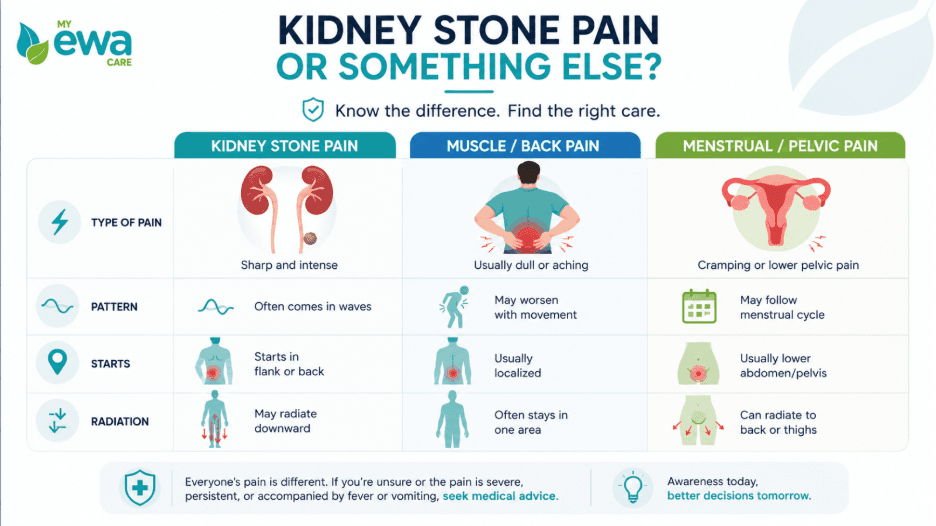
Unexpected symptoms you might experience include the following:
Kidney stone symptoms in women are frequently mistaken for severe menstrual cramps, endometriosis episodes, or even ovarian cysts. Because the lower pelvic region shares pain receptors, many women spend days seeking the wrong type of guidance before realizing it is actually a urinary tract issue.
When discussing their physical symptoms, patients often ask their providers, do kidney stones cause back pain? The answer is yes, they certainly do. However, the sensation is fundamentally different from a pulled muscle or a spinal issue. It is typically a sharp, radiating spasm that comes in intense waves, rather than the dull, constant ache of a musculoskeletal injury. No amount of stretching, massaging, or postural adjustment will alleviate it.
You might also wonder if kidney stones can cause gas or even lead to severe temporary constipation. Absolutely. Because the urinary tract and the intestinal tract share the vagus nerve pathway, severe flank pain often tricks the body into slowing down your overall digestion. This sympathetic nervous system response causes uncomfortable bloating and trapped air that often distracts patients from the true root cause of their pain.
Furthermore, many people want to know if kidney stones can cause frequent urination. This is highly common, especially during the final stages of the passage journey. As the object moves out of the upper tract, travels down the narrow ureter tube, and begins to directly irritate the bladder wall, you may feel an intense, burning urge to go, even if very little liquid actually passes.
Finally, if you are currently wondering how long kidney stone pain lasts, it is important to know that the discomfort usually arrives in rhythmic waves, medically known as renal colic, that can last anywhere from twenty minutes to a full hour. These waves correspond exactly to your ureter spasming as it attempts to naturally push the blockage downward into the bladder. Once the wave passes, you may experience a period of complete relief before the next spasm begins.
Is a 5mm kidney stone big? Understanding average stone size
A major driver of unnecessary medical costs and premature physical intervention is simply a misunderstanding of dimensions. Patients frequently see a millimeter measurement on a medical report and assume the absolute worst possible outcome.
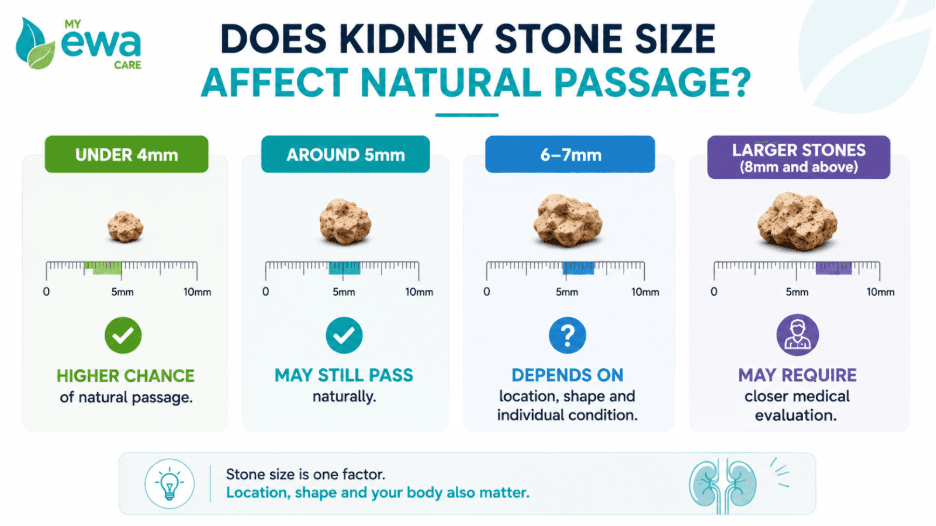
When reviewing your medical scan, understanding the average kidney stone size is critical to managing your anxiety. When a doctor hands over an ultrasound report, a patient will frequently look at the numbers and wonder, is a 5mm kidney stone big? In the context of natural passage, a 5mm kidney stone is generally considered highly manageable. In fact, the standard kidney stone size to pass naturally frequently includes objects up to this exact dimension without ever requiring invasive surgical extraction. Global health data shows that sizes under four millimeters have an eighty percent chance of passing on their own, while five-millimeter sizes still have roughly a fifty percent chance of clearing naturally with time and heavy hydration.
These objects often cause the most pain not because of their massive volume, but because of their jagged edges irritating the incredibly narrow ureter tube. Before panicking over the actual size of a 7mm kidney stone, patients often ask their care teams if a 7mm kidney stone can dissolve. While calcium-based objects do not truly dissolve just by drinking water, understanding a normal kidney stone size helps you realize that a significant percentage of these borderline situations can still be managed conservatively.
With aggressive fluid intake, specific dietary adjustments, and guided, watchful observation, the human body is remarkably adept at flushing these out over a matter of weeks. Rushing into an immediate extraction procedure for a borderline size often leads to unnecessary recovery time and highly inflated medical bills.
What is the cost of a CT scan for kidney stones vs an ultrasound?
Accepting the very first diagnostic test recommended without asking questions is one of the fastest ways to escalate your personal medical expenses. When you are in the emergency room or a local clinic, care providers often default to the most technologically advanced imaging available, regardless of whether it is strictly necessary for your specific situation.
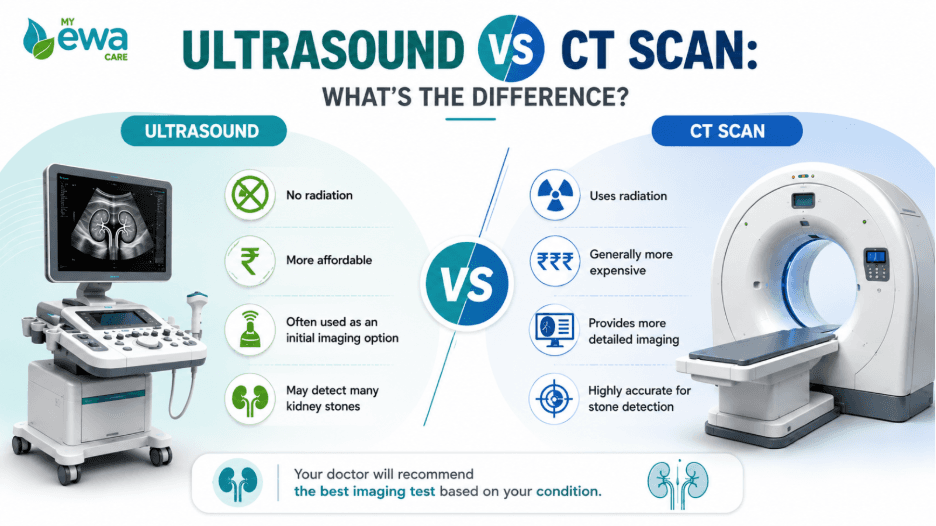
Before you agree to an expensive scan, it helps to compare your options for both diagnostic clarity and budget friendly efficiency:
Diagnostic Tool | What It Is | Cost and Navigation Insight |
|---|---|---|
Ultrasound Diagnostics | This radiation free imaging utilizes sound waves. Many patients ask, can an ultrasound detect kidney stones? Yes, highly effectively. | Kidney stone sonography is the safest, most affordable starting point. The price of a kidney stone ultrasound, often listed as the kidney stone sonography price, is significantly lower than advanced scans. |
CT Scan Diagnostics | This is high precision, heavy radiation imaging. While incredibly accurate, it is a massive diagnostic tool. | Understanding the cost of a CT scan for kidney stones is crucial because it is substantially higher and is often an unnecessary initial step. |
How to reduce kidney stone pain immediately and spot warning signs
Care navigation is entirely about knowing when it is perfectly safe to manage your healing at home, versus recognizing exactly when immediate physical evaluation is necessary to prevent severe complications.
If you find yourself frantically wondering how to reduce kidney stone pain immediately when standard pharmacy pain relievers are too slow to kick in, start with your body mechanics. Finding a comfortable position for kidney stone pain relief, such as lying on the side that does not hurt with your knees drawn up toward your chest in a fetal position, while applying a warm heating pad to your flank, can provide immediate, soothing comfort to your spasming muscles.
Additionally, utilizing a gentle home remedy for kidney stone pain relief, such as drinking warm barley water for kidney stones mixed with a splash of fresh lemon juice, helps safely increase your overall urine volume. Because barley acts as a mild, natural diuretic, it helps create the fluid pressure necessary to naturally flush the urinary tract.
However, you must remain incredibly vigilant for physiological red flags. You must ask yourself, can kidney stones cause a fever? Yes, they absolutely can. A fever accompanied by severe chills, intractable vomiting, or bad smelling urine indicates a potential infection or total urinary blockage. If these specific warning signs occur, it is time to abandon home remedies and seek immediate physical medical evaluation.
If your symptoms remain manageable and your pain is controlled, but a rapid extraction procedure is still being aggressively recommended by a local clinic, booking an online specialist consultation to review your existing scans gives you the crucial breathing room to assess whether natural passage is still a safe, viable option for your body.
What test for kidney stones should you ask for?
The ultimate key to navigating a painful episode successfully is confidently advocating for yourself. Arm yourself with the right questions to ensure you are making a clear, well informed decision regarding your entire care journey.
When speaking with a physician, ask exactly what test for kidney stones is strictly necessary today to minimize your radiation exposure and lower your final bill. Passing one of these objects once is enough for a lifetime, so you must also focus on lasting prevention. Ask your provider if kidney stones are genetic for your specific makeup, such as calcium oxalate or uric acid. Furthermore, request a customized kidney stone diet chart to help prevent recurrences through natural dietary adjustments down the road.
When faced with a sudden recommendation for an invasive procedure, you might find yourself asking: should I take a second opinion before surgery for an object that could potentially pass on its own? The answer is almost always yes.
Utilizing the best doctor consultation services focuses entirely on your lasting relief rather than just acute, rushed interventions. If you feel pressured by a hospital timeline, securing an independent medical second opinion ensures you are moving forward out of clarity, not fear.
Navigating a painful episode should never be a solo effort. Reach out to a MyEwaCare Care Manager today for neutral, compassionate guidance on your next steps.
Frequently Asked Questions
What is the best way to sleep when experiencing renal colic?
If you are struggling to sleep due to severe spasms, lie on the side opposite to the pain. Bring your knees slightly up toward your chest in a loose fetal position. Placing a warm heating pad directly on your back or flank can help relax the ureter muscles that cause the intense waves of pain, allowing you to finally get some rest.
How quickly does barley water work to flush the urinary tract?
While barley water is an excellent and gentle diuretic, it is not an instant cure. Drinking it consistently throughout the day increases your overall fluid production. This steady increase in volume helps create the necessary pressure to naturally push the blockage downward over a matter of days, rather than hours.
Why do women often mistake these symptoms for gynecological issues?
Because the pain maps heavily to the lower abdomen and pelvic region, it is incredibly easy to confuse the two. However, renal colic typically originates higher up in the back or flank and radiates downward, often arriving in sharp, unpredictable waves. Gynecological pain is generally more centralized, lower, and constant. If you are unsure, a simple sonography scan can quickly differentiate the two without exposing you to radiation.
If a scan shows a 6mm size, is an extraction procedure my only option?
Not necessarily. While sizes over five millimeters are slightly less likely to pass on their own compared to smaller objects, a six-millimeter size still has a reasonable chance of natural passage depending on its exact shape and current location in the ureter. This is exactly why getting independent guidance before committing to a surgical extraction is so critically important for your overall care timeline.
Can hydration alone dissolve a calcium oxalate structure?
No. The vast majority of these structures are made of calcium oxalate, and these specific types do not break down in water. The purpose of heavy hydration is not to melt the object, but to create enough fluid volume and physical pressure to literally wash the solid crystal out of your urinary tract. Only specific types, like uric acid variants, can sometimes be dissolved with specialized prescription medications that alter the chemistry of your urine.