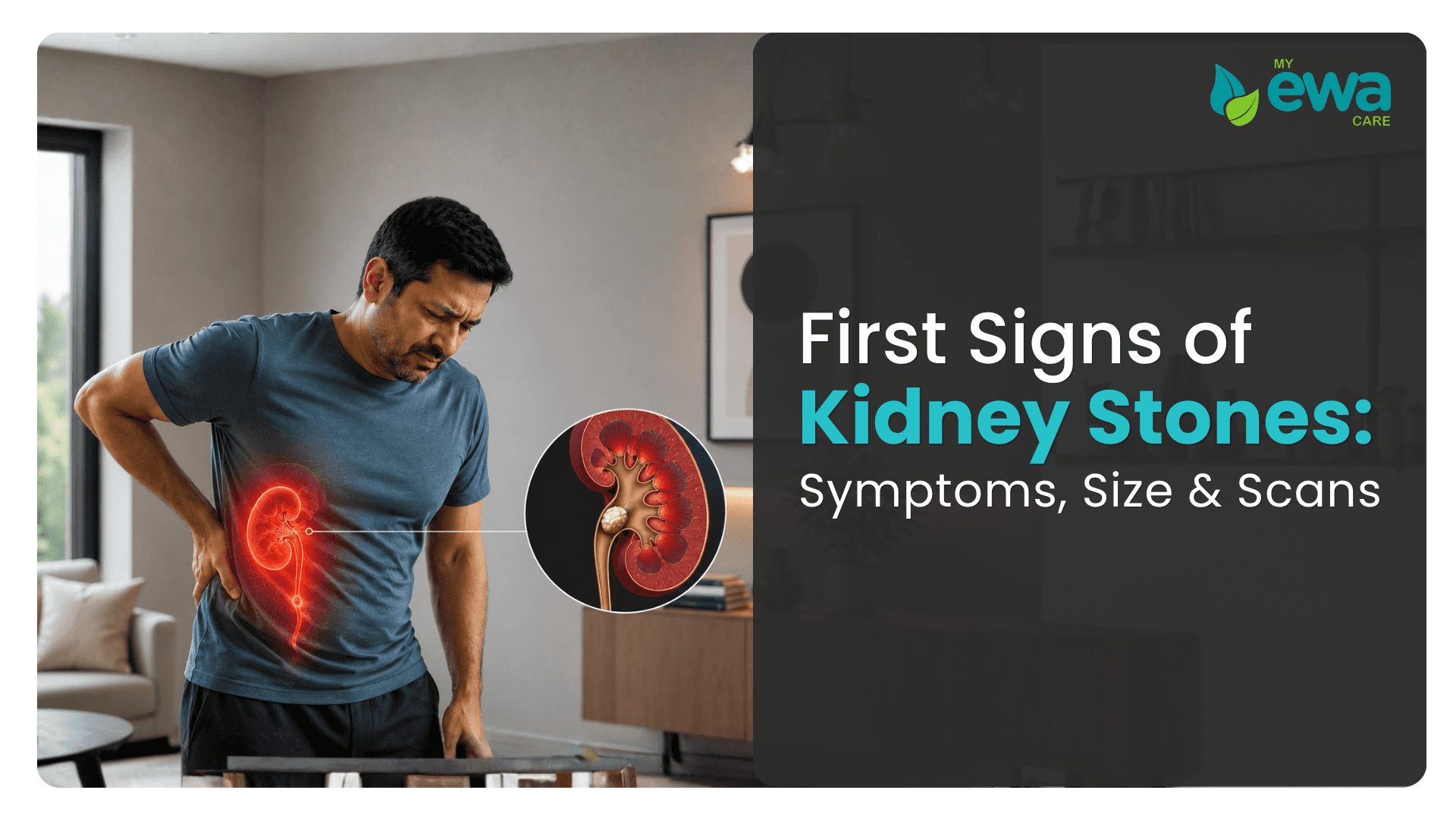
If you or someone close to you has recently been told there are stones in the gallbladder, the first reaction is almost always confusion, worry, and a flood of questions. Do these stones need to be removed? Is surgery the only option? Are they even dangerous? This guide is here to give you clarity. Not to alarm you, but to help you understand what gallbladder stone symptoms mean, how stone size matters, and what to ask before making any decision.
What Patients are Often Confused About
Gallbladder stones are one of the most commonly misunderstood digestive conditions. Many patients who are diagnosed feel pressure to act immediately, often without fully understanding whether their situation requires urgent intervention. Here is what creates the most confusion:
Whether all stones need to be removed or just some
Whether the pain they feel is definitely from the stones or something else
Why one doctor recommends surgery while another suggests waiting
Whether a stone found on a routine scan is actually causing harm
How stone size relates to risk
Is Every Gallbladder Stone Dangerous or are Some Safe to Observe?
Is gallstone dangerous in every case? Not necessarily. Many people live with gallbladder stones for years without any symptoms at all. These are known as asymptomatic gallstones and are far more common than most people realise. Are gallstones dangerous depends on size, whether they are causing symptoms, position, and how long they have been there. Feeling confused about diagnosis at this stage is understandable. What it calls for is guidance, not panic.
Why Do Gallbladder Stone Symptoms Feel Different in Different People?
Gallbladder stone pain symptoms vary widely. Some people experience sharp, intense pain in the upper right abdomen after a fatty meal. Others feel a dull, persistent ache. Some feel nothing at all. This variation depends on whether the stone is moving, whether it is blocking a duct, and how sensitive the individual's digestive system is.
What Are the Symptoms of Gallbladder Stones
Understanding gallbladder stone symptoms clearly is the first step toward an informed decision. Symptoms can range from very mild to quite severe depending on how active the stones are.
Early Symptoms of Gallbladder Stones You Should Not Ignore
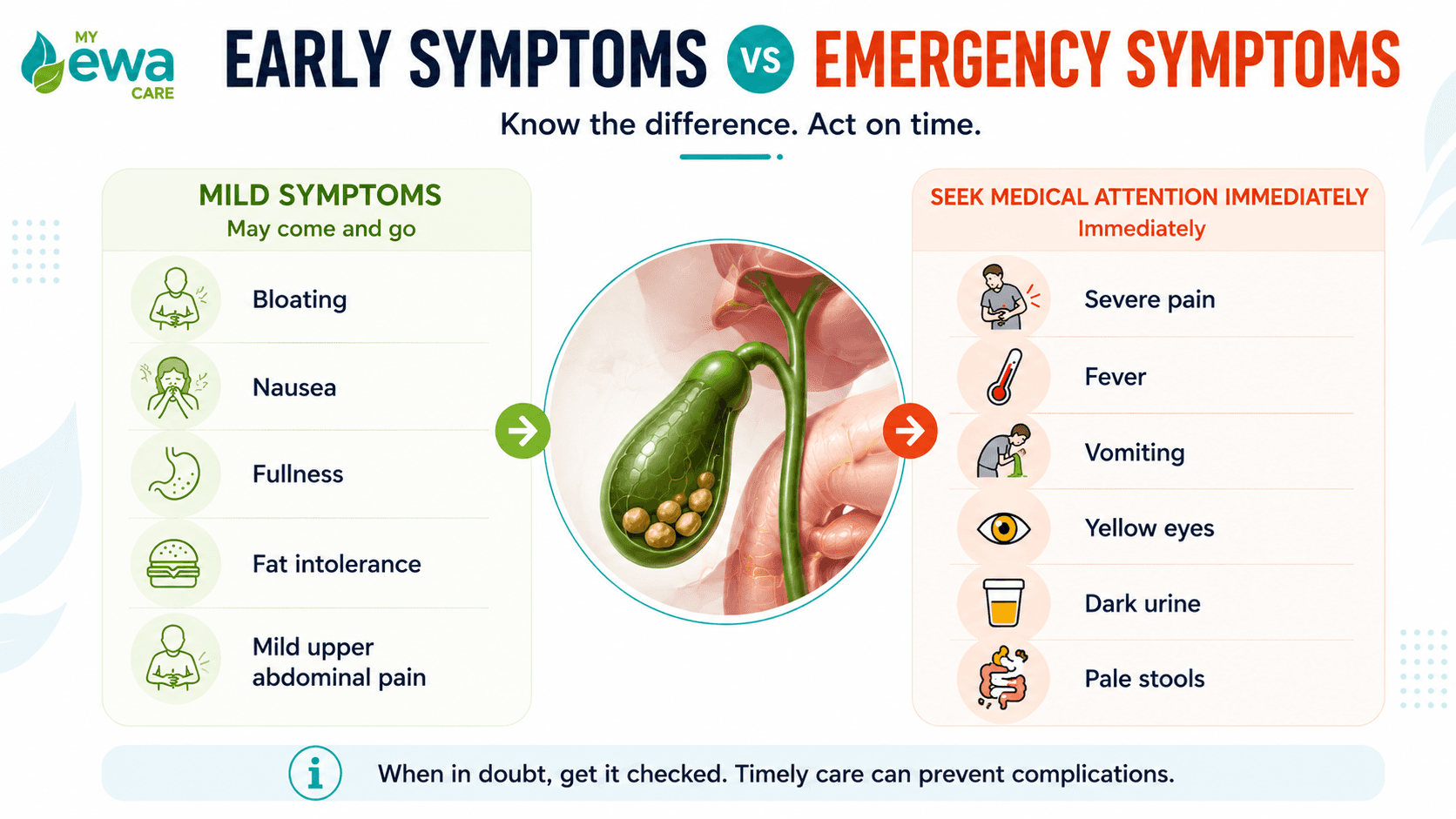
The early signs are often easy to dismiss because they mimic other digestive issues. Bloating after meals, mild nausea, a feeling of heaviness in the upper abdomen, and intolerance to fatty or fried foods are among the earliest signals the body sends. What are the first signs of a bad gallbladder? Most commonly they include a dull ache under the right rib cage, a feeling of fullness that does not pass quickly after eating, and occasional nausea particularly after a heavy or oily meal.
Where is Gallbladder Pain Felt and How to Recognise it
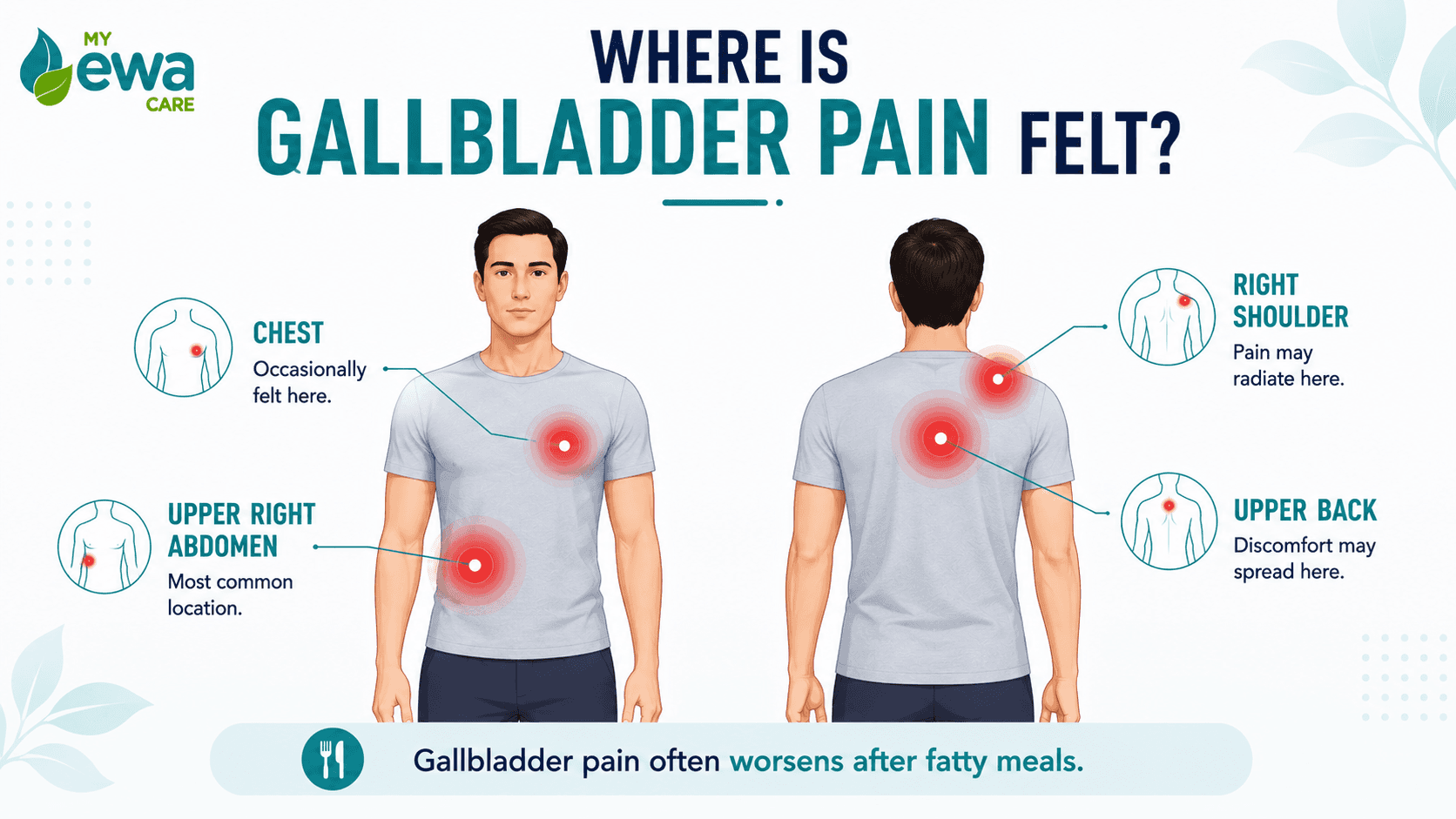
Gallbladder pain location is typically in the upper right side of the abdomen, just below the rib cage. Where is gallbladder pain felt can vary. It sometimes radiates to the right shoulder, the upper back, or even the chest. The gallbladder stone pain area tends to become more noticeable after eating. When pain becomes sudden, severe, or is accompanied by fever or yellowing of the skin, it requires prompt medical attention.
What Are the First Signs of a Bad Gallbladder
Beyond pain, other signs include persistent indigestion that does not ease with usual dietary adjustments, clay-coloured stools, dark urine, and jaundice. Gallbladder stone pain relief in these situations comes only after proper assessment. What is the fastest way to relieve gallbladder pain during an episode? Avoiding food entirely, applying a warm compress, and staying hydrated can offer temporary comfort, but these are not a long-term solution.
Why and How Gallbladder Stones Are Formed
Understanding how gallbladder stones are formed helps patients make sense of their diagnosis and take meaningful steps to prevent them from growing.
What Causes Gallstones to Develop Inside the Gallbladder
The gallbladder stores bile, a digestive fluid produced by the liver. When its chemical balance is disrupted, bile hardens into crystals and forms stones. What causes gallbladder stones is primarily an imbalance between cholesterol, bile salts, and bilirubin. Why do gallstones form? It comes down to several factors including excess cholesterol in bile, incomplete gallbladder emptying, rapid weight loss, prolonged fasting, and certain metabolic conditions. Why stones are formed in gallbladder and why stone in gallbladder forms in some people and not others involves lifestyle, diet, genetics, and hormonal factors.
Who is More Likely to Develop Gallbladder Stones
Why gallstones form more commonly in certain individuals comes down to a few shared risk factors. Women, particularly those who have been pregnant or are on hormonal medication, are more prone to gallstone formation. People over 40, those with obesity, those following a high-fat low-fibre diet, and those with a family history of gallstones are all at higher risk. Why gallbladder stones are formed more often in these groups relates to hormonal influences on bile composition and gallbladder emptying rate. Reasons for gallstones also include genetic predisposition and metabolic factors.
Which Size of Gallbladder Stone is Dangerous
One of the most searched questions about this condition is which size of gallbladder stone is dangerous. Gallbladder stone size plays a significant role in determining how serious the situation is and what kind of guidance is appropriate.
Small Stones of 5mm and 6mm - Do They Need Attention?
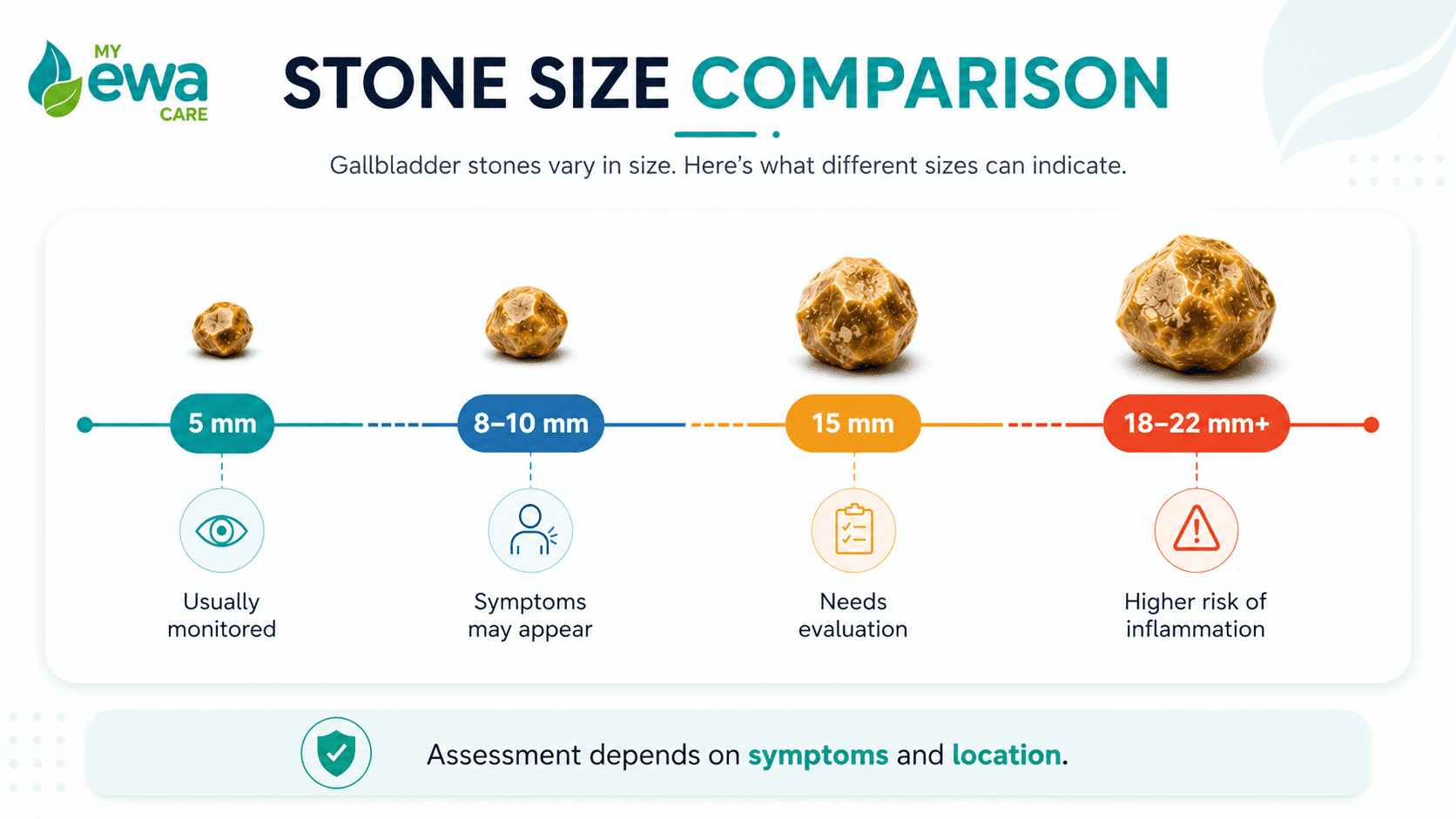
A 5mm stone in gallbladder or a 6mm stone in gallbladder is considered small. In many cases, stones of this size are asymptomatic and discovered incidentally during a routine ultrasound. Small stones do not automatically require intervention. However, they are more likely to migrate into the bile duct and cause a blockage than larger stones. This is why even a small stone should be monitored with professional guidance.
Medium Stones of 8mm to 15mm - When Should You Worry?
An 8mm stone in gallbladder, a 10mm stone in gallbladder, or a 15mm stone in gallbladder falls into the medium range. These stones are more likely to cause noticeable symptoms including pain after meals, bloating, and nausea. Whether intervention is needed depends on symptoms, stone growth, and gallbladder function. This is a range where seeking a medical second opinion before making any decision is especially valuable.
Large Stones of 18mm, 22mm and Above - What They Mean
An 18mm stone in gallbladder or a gall bladder stone size 22mm and above is considered large. These stones are more likely to cause chronic inflammation of the gallbladder wall. Large stones causing persistent symptoms or recurring pain need careful evaluation, but even here the decision about next steps should not be rushed.
What Are Silent Gallbladder Stones and Are They a Concern?
Asymptomatic gallstones, also called silent stones, are present but cause no pain or discomfort. They are often found during scans done for other reasons. Multiple stones in gallbladder that are silent do not always need immediate action. Expert medical advice helps patients decide whether to monitor and how frequently.
Common Unnecessary Steps to Avoid
Many patients with gallbladder stones undergo procedures or spend significant money on investigations that were not necessary at their stage of the condition.
Why Rushing into an Operation May Not Always be the Right Step
Can gall bladder stone be removed without surgery? In many cases, yes, particularly when stones are small, asymptomatic, or early stage. Gallbladder stone without surgery is a valid path for many patients, and yet many are pushed toward an operation before exploring this fully. The decision to avoid unnecessary surgery should be based on stone size, symptom pattern, and overall health, not on fear or a single brief consultation.
Should You Take a Second Opinion Before Deciding on Gallbladder Surgery?
A second opinion before surgery is not a sign of distrust. It is a responsible step that gives you a fuller picture. Doctor second opinion consultations regularly result in a different recommendation or a less invasive approach. Should I take second opinion before surgery? If you are not fully clear on why removal has been recommended, seeking another perspective is one of the most sensible things you can do.
What Usually Gets Overdiagnosed
Gallbladder stones are among the conditions where overdiagnosis and over-intervention are genuinely common.
When Gallbladder Stones are Found Accidentally on a Scan
A large proportion of gallbladder stone diagnoses happen incidentally. A scan done for an unrelated issue finds stones that were never causing symptoms. Asymptomatic gallstones in patients with multiple stones in gallbladder who have no pain or discomfort are often best managed through monitoring rather than intervention.
Not Every Stone Seen on an Ultrasound Needs Immediate Action
If you are confused about diagnosis after being told you have gallbladder stones, you are not alone. The presence of stones on an ultrasound does not automatically mean the gallbladder is failing or that surgery is the only path. Is gallbladder stone dangerous in every case? No. A calm, thorough assessment will help determine what is actually needed in your specific situation.
Can Gallbladder Stones Heal Without an Operation
How to remove gallbladder stone without operation is one of the most common questions patients have after diagnosis. For many patients, non-operative paths are entirely valid. The answer depends on the size, type, and behaviour of the stones.
When Watchful Waiting is a Valid Path Forward
Gallbladder stone without surgery, through a process called watchful waiting, is appropriate when stones are small, asymptomatic, and not growing. Mild, infrequent episodes may still be manageable without an operation. Watchful waiting involves regular monitoring through ultrasound, dietary adjustments, and awareness of any change in symptoms. It is not ignoring the condition. It is managing it wisely.
Can Gallbladder Stones Dissolve on Their Own
Can gallstones be dissolved? Certain cholesterol-based stones can reduce in size over time with specific medical guidance and dietary changes, though complete dissolution is not guaranteed. How to dissolve gallbladder stones requires professional supervision. How to remove stone from gallbladder without surgery through dissolution therapy is worth asking about during a consultation, depending on your stone composition and size.
When Guidance Before Proceeding Helps
At every stage of a gallbladder stone journey, guidance before proceeding leads to better outcomes and fewer regrets.
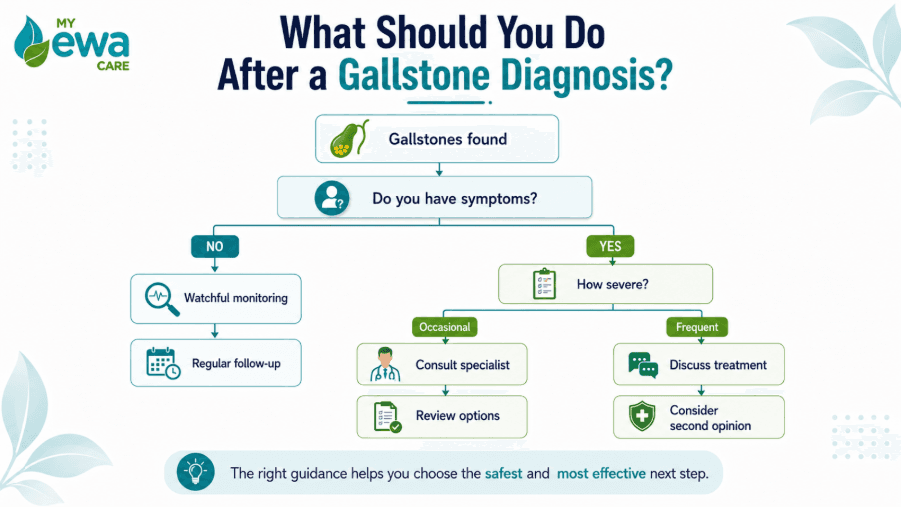
When to Seek a Medical Second Opinion for Gallbladder Stones
A medical second opinion is particularly valuable when you have been advised to remove your gallbladder, but your stones are small or silent, when reports from two doctors' conflict, or when costs escalate without improvement. A doctor second opinion does not delay your care. It improves the quality of the decision you make. Second opinion before surgery for gallbladder stones is one of the most cost-effective steps a patient can take.
Questions to Ask Your Doctor Before Taking the Next Step
When you consult a specialist, whether in person or through online doctor consultation, these questions are worth asking:
Does my stone size and type actually require intervention right now?
What happens if I wait and monitor for the next three to six months?
Are there non-operative options suitable for my specific situation?
Which doctor to consult if I want a second perspective on my diagnosis?
What dietary and lifestyle changes should I make immediately?
How will I know if my condition is worsening?
Expert medical advice at this stage is about gaining enough clarity to make your own informed decision.
How to Avoid Unnecessary Costs
Gallbladder stone management can become expensive when investigations happen without a clear plan.
Understanding What Changes and What Does Not with Early Intervention
Many patients spend significantly on tests that do not change the management plan. Avoid unnecessary surgery by first establishing whether your stones are symptomatic enough to warrant it. Ask what a scan will actually change about your next step. If the answer is nothing, it may not be necessary yet.
How Seeking Clarity Before a Decision Can Protect You from Avoidable Procedures
Online doctor consultation platforms make it easier to get expert medical advice without the cost of multiple in-person visits. A single well-informed guidance session can save patients from weeks of uncertainty and avoidable procedures.
Diet and Lifestyle Guidance for Gallbladder Stones
Diet plays a meaningful role in managing gallbladder stones and preventing new ones from forming. While food choices alone cannot dissolve stones, they can significantly reduce symptom frequency.
Foods to Avoid with Gallbladder Stones
Foods to avoid with gallbladder stones are typically those high in saturated fat, trans fat, or refined sugar, since these put the most strain on the gallbladder. Common triggers for gallbladder stone pain episodes include:
Fried foods and deep-fried snacks
Red meat and processed meats
Full fat dairy products
Rich gravies and creamy sauces
Spicy foods
Carbonated drinks
Alcohol
What to Eat When You Have Gallbladder Stones
Food for gallbladder stone patients should be high in fibre, low in fat, and easy to digest. A practical gallbladder stones diet chart can include:
Fresh fruits and vegetables
Whole grains such as oats and brown rice
Lentils and legumes
Lean proteins like fish and skinless chicken
Small, frequent meals instead of large ones
Following a proper gallstones diet as advised by your doctor supports long-term gallbladder health.
Lifestyle Habits That Support Gallbladder Health
Gallbladder stone prevention involves maintaining a healthy weight, avoiding crash dieting, staying physically active, and eating at consistent times. Rapid weight loss is a known trigger for stone formation, so any weight management plan should be gradual and guided.
Frequently Asked Questions About Gallbladder Stones
Can a 5mm or 6mm gallbladder stone go away on its own?
Small stones like a 5mm stone in gallbladder or 6mm stone in gallbladder do not typically dissolve on their own. If asymptomatic, they may remain stable for years. Regular monitoring is recommended.
Which size of gallbladder stone is dangerous enough to need an operation?
here is no single size threshold that automatically requires surgery. Which size of gallbladder stone is dangerous depends on symptoms, stone type, and location. Stones above 10mm causing frequent pain are more commonly considered for intervention, but the decision should always be individualised.
Can gallbladder stones be removed without removing the gallbladder?
In select cases, yes. Can gallstones be dissolved depends on whether they are cholesterol-based and whether the patient meets certain criteria. This is worth discussing with your doctor before agreeing to removal of the gallbladder itself.
What are the first signs of a bad gallbladder?
What do the first signs of a bad gallbladder include pain in the upper right abdomen after meals, persistent bloating, nausea, intolerance to fatty foods, and in more advanced cases, yellowing of the skin or dark urine.
How are gallbladder stones formed?
How gallbladder stones are formed relates to an imbalance in bile composition. When cholesterol or bilirubin levels in bile are too high, they crystallise over time and form stones. Lifestyle, diet, hormones, and genetics all contribute.
What should I eat if I have gallbladder stones?
A gallbladder stones diet should be low in fat, high in fibre, and based on small frequent meals. Foods to avoid with gallbladder stones include fried and processed foods, red meat, and full-fat dairy. Food for gallbladder stone patients that works well includes fruits, vegetables, whole grains, and lean proteins.
Ready to Make a Clearer Decision About Your Gallbladder Health?
If you have been diagnosed with gallbladder stones and are unsure about what to do next, speaking to a Care Manager before committing to any procedure is one of the most valuable steps you can take. Whether you need clarity on your diagnosis, want a medical second opinion, or are looking for expert medical advice through an online doctor consultation, guidance at this stage helps you make the right decision for your specific situation.
Speak to a Care Manager for guidance before next steps.