
Missing a period, dealing with cramps that knock you out, or watching your cycle become unpredictable are experiences more common than you think. If you have ever wondered whether what you are going through is bad enough to be taken seriously, you are not alone. We hear this from women every single day.
Common menstrual disorders affect a huge number of women, yet many either push through symptoms they should not have to live with or go through tests and procedures that were never necessary. This blog helps you understand what menstrual disorder is, what causes it, and how to move forward without wasting time, money, or energy.
What is a Menstrual Disorder and What are the Common Types
A menstrual disorder is anything that disrupts how your period normally works, whether that is the timing, the flow, the pain, or all three at once. Menstrual cycle disorders look different from one woman to the next, which is why a one-size-fits-all approach rarely works. Here are the types of menstrual disorders explained simply:
Dysmenorrhea refers to painful periods, either without an underlying cause (primary) or linked to conditions like endometriosis or fibroids (secondary)
Menorrhagia refers to abnormally heavy or prolonged bleeding, where soaking through a pad in under an hour for several hours is a key indicator
Amenorrhea is when periods stop completely for three or more months in someone who is not pregnant
Oligomenorrhea refers to infrequent periods where the gap between cycles is consistently more than 35 days
Irregular cycles describes unpredictable timing, duration, or flow that has no consistent pattern
One distinction worth knowing is the difference between PMS (Premenstrual Syndrome) and PMDD (Premenstrual Dysphoric Disorder):
PMS involves bloating, mood changes, and fatigue before a period while PMDD involves severe depression, intense anxiety, and emotional shifts that genuinely disrupt daily life.
PMDD is not just bad PMS. It is a recognized clinical condition that deserves proper evaluation.
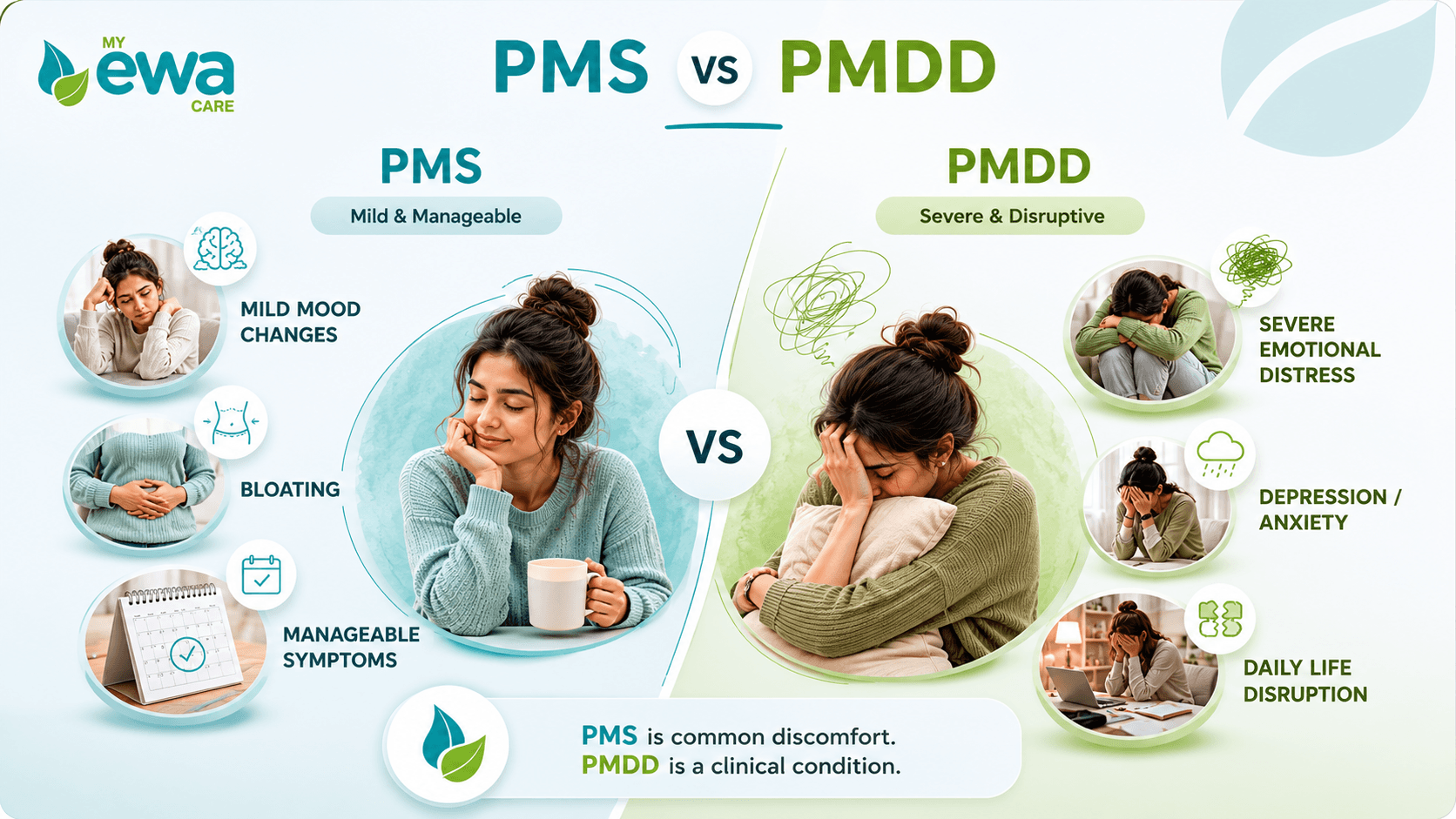
PMS is common discomfort. PMDD is a clinical condition. They are not the same.
Causes and Symptoms of Menstrual Disorders Women Should Know
Understanding the causes of menstrual disorders matters because your next step depends entirely on what is driving the problem. When women ask what causes menstrual disorder, the answer is rarely one single thing. Knowing menstrual disorders causes and symptoms together gives you a much stronger foundation before you walk into a consultation.
Why are my periods irregular?
Hormonal fluctuations, thyroid issues, PCOS, weight changes, and transitions like perimenopause can all disrupt cycle regularity. Guessing without knowing the actual cause is how women end up on the wrong path for months.
Can stress cause irregular periods?
Yes, far more than most women expect. Prolonged stress disrupts the hormonal pathway that controls ovulation and menstruation. For many young women managing demanding lives, stress is the most overlooked cause of an irregular cycle.
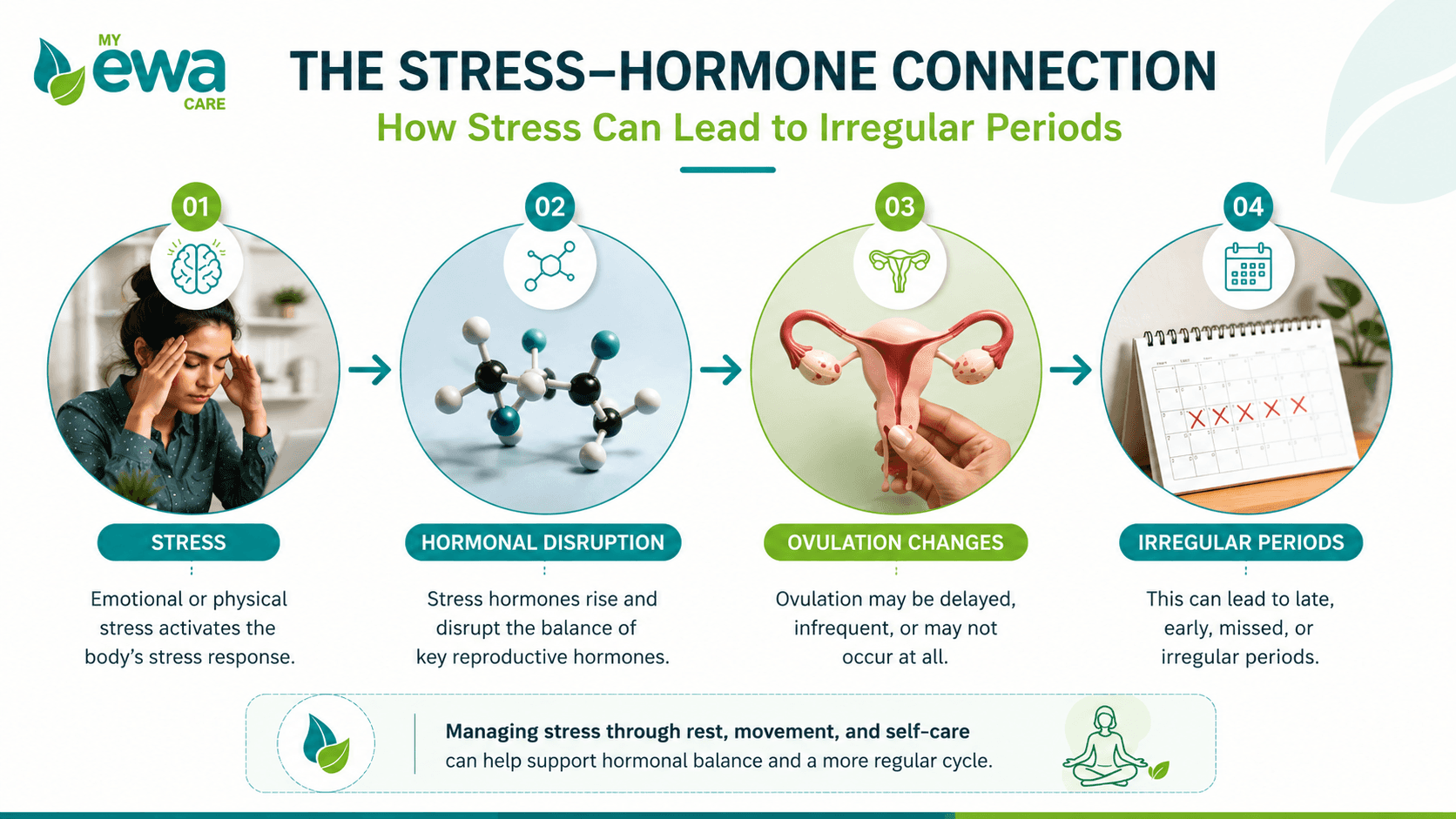
Stress does not just affect your mood. It directly disrupts your menstrual cycle.
What causes heavy periods?
Many women are told it is genetic and simply accept it. But heavy periods are also a sign of fibroids, polyps, adenomyosis, thyroid disorders, and clotting conditions, all identifiable with the right tests. You deserve to know the actual reason.
Key symptoms of menstrual disorders to watch for:
Periods arriving much earlier or later than your usual pattern
Flow noticeably heavier or lighter than your norm
Pelvic pain before, during, or after your period beyond manageable discomfort
Bleeding between periods or after intercourse
Ongoing fatigue or dizziness possibly linked to anemia
What Women are Most Confused About with Menstrual Disorders
The most common question is how do I know if I have a menstrual disorder, and there is no single test for it. Many women also ask is my period normal, and the answer is that a healthy cycle falls between 21 and 35 days, lasts 2 to 7 days, and involves discomfort that does not stop you from functioning. Pain that disrupts your work or sleep regularly is not something to normalize.
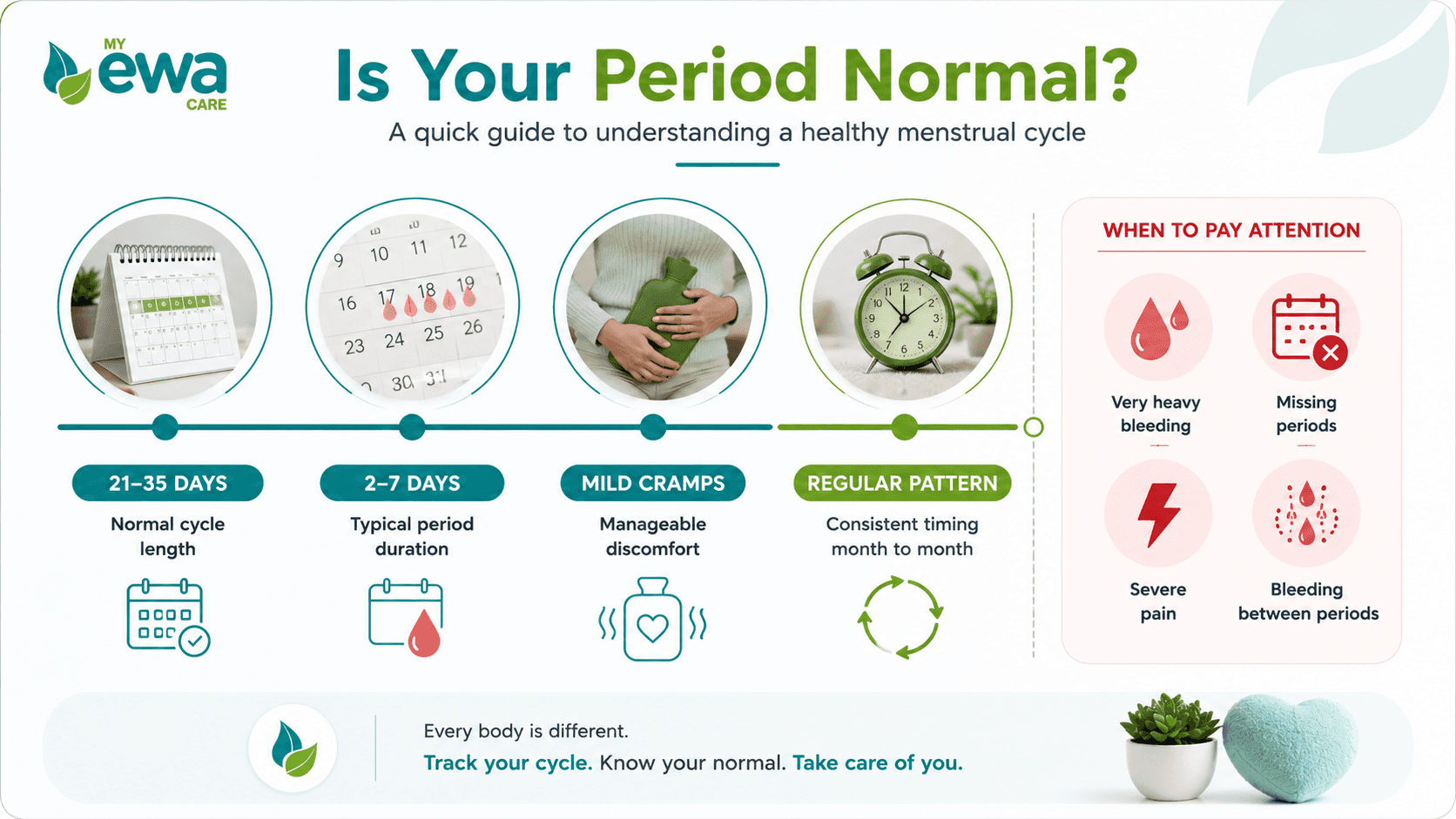
Every body is different. Track your cycle, know your normal.
Temporary irregularity from stress or illness is common, but when it persists across two or three cycles without reason, it is worth investigating. And hormonal imbalance is not a diagnosis. It is a phrase. Always ask for specific results, specific numbers, and a clear explanation of what they mean for your cycle.
Steps Most Women Take that are Not Always Necessary
Being informed about what to avoid is just as useful as knowing what to do. These are some of the most common steps women take when dealing with menstrual disorders that are not always necessary:
Starting hormonal therapy without a clear diagnosis. The pill is frequently prescribed to regulate periods without identifying why they are irregular. It manages the symptom but not the root cause, so the issue returns when you stop.
Repeating the same scan without a new reason. Two ultrasounds with the same inconclusive finding rarely need a third. Ask what the result will actually change before agreeing.
Moving toward surgery before non-surgical options are tried. Laparoscopy is recommended earlier than necessary for endometriosis more often than it should be.
Treating hysterectomy as the first answer to fibroids. Less invasive options exist. Always get a second opinion before agreeing to surgery at this scale.
When Getting Guidance on Menstrual Disorders Before Proceeding Helps
Before starting hormonal therapy, understand what you are taking, how long, and what happens when you stop. Before any procedure, know what it will and will not confirm. When doctors are recommending different things, a neutral perspective helps you understand what the evidence actually supports. And if symptoms keep returning, ask whether the right underlying cause was ever identified in the first place.
How to Keep Costs in Check When Investigating Menstrual Disorders
Ask what specifically is being tested and what the result will change before agreeing to any investigation.
Many hormonal tests only give meaningful results at a specific point in the cycle. Wrong timing leads to misleading results and further unnecessary testing.
Advanced fertility panels, genetic screening, and 3D ultrasounds are not routine. Ask whether your situation specifically calls for them.
Menstrual Disorders that are Frequently Over-diagnosed
Let us be direct about this, because it affects a lot of women.
PCOS from a single ultrasound. A polycystic ovary appearance on a scan is not a PCOS diagnosis on its own. A real diagnosis needs a symptom history and hormonal profile alongside imaging. Many women are labelled with PCOS from a scan alone and spend years in unnecessary anxiety and on medication.
Hormonal imbalance as a standalone explanation. Borderline results without a full clinical picture should not lead to long-term hormonal management when other causes have not been ruled out.
Subclinical hypothyroidism as the complete answer. Thyroid function matters and is worth checking, but borderline results are rarely the whole story when it comes to menstrual irregularity.
Menstrual Disorders: When to See a Doctor
Some signs are worth acting on without waiting:
Soaking through protection in under an hour for two or more consecutive hours
Periods stopped for three months or more with pregnancy ruled out
Pain severe enough to regularly disrupt work, sleep, or daily activities
Bleeding between periods or after intercourse
Cycles dramatically different after years of being consistent
Ongoing fatigue or dizziness tied to your cycle
A symptom that is new, getting worse, or not going away is reason enough to seek guidance. You do not need to wait until it becomes a crisis.
Questions Worth Asking Your Doctor about Menstrual Disorders
Going in prepared genuinely changes what you get out of a consultation. These are worth asking:
What do you think is causing this and how confident are you in that assessment?
What tests do I actually need and what will the results change about my care?
Are there non-hormonal or lifestyle approaches worth trying first?
If this does not work, what is the next step?
Will any of this affect my fertility now or later?
Does this need immediate action or can we monitor it for another cycle or two?
Frequently Asked Questions about Menstrual Disorders
Is my period normal or could I have a menstrual disorder?
A healthy cycle falls between 21 and 35 days, lasts 2 to 7 days, and involves manageable discomfort. If symptoms are regularly disrupting your daily life, it is worth discussing with a healthcare provider.
Why are my periods suddenly irregular?
Stress, thyroid changes, weight shifts, and early perimenopause are common triggers. One irregular cycle is usually fine, but two or three in a row without reason is worth investigating.
Can stress cause irregular periods?
Yes. Chronic stress disrupts ovulation at a hormonal level and is one of the most underestimated causes of cycle irregularity, especially in women managing high-pressure lives.
What causes heavy periods every month?
Fibroids, polyps, adenomyosis, thyroid dysfunction, and clotting disorders are all possible causes. Monthly heavy bleeding is worth investigating, not just managing.
What is the difference between PMS and PMDD?
PMS involves manageable premenstrual symptoms like bloating and mood changes. PMDD involves severe emotional symptoms that significantly disrupt daily life. They are not the same condition and should not be handled the same way.
How do I know if I have a menstrual disorder?
Track your cycle for two to three months, noting length, flow, pain, and any consistent symptoms. That information is genuinely valuable to bring into a consultation.
When should menstrual disorders be investigated?
Any symptom that is new, persistent, or getting worse is reason enough. You should not have to reach a breaking point before seeking clarity.
Can menstrual disorders affect fertility?
Some can, particularly those involving irregular or absent ovulation. Identifying the cause early gives you the best foundation for future fertility planning.
Your menstrual health matters. The prevention of menstrual disorders and their long-term effects starts with paying attention early and asking the right questions. At MyEwaCare, we know how exhausting it can be to chase answers through a system that does not always move at your pace. If you are unsure about your next step, we are here to help you think it through clearly.
Not sure what your next step should be?
Speak to a Care Manager for guidance before next steps. Whether you are preparing for a consultation, making sense of a recent diagnosis, or simply not sure where to begin, we are here to help you navigate with confidence.

Female infertility symptoms & its guidance with MyEwaCare

PCOS New Name 2026: What Is PMOS & What Does It Mean for You

What Causes Fibroids Natural Remedies for Uterus Fibroids, Fibroid Diet
Signs of Polycystic Ovaries & Irregular Periods Causes

Proactive Women's Health Check Up & female wellness tips